If you’re searching for compact, countertop, or mini-fridge friendly water filter jugs, you’re in the right place. This guide highlights five reliable small water filter pitchers that balance performance with space-saving design. Each option targets different needs—budget filtration, fridge-friendly sizing, quick filtering, and NSF-certified reliability—so you can choose the best fit for your daily hydration and kitchen setup. The top picks below are best for apartment dwellers, office kitchens, dorm rooms, and anyone who wants cleaner-tasting water without bulky pitchers.
Summary table of selected products:
| Product | Best For | Capacities | Why Pick |
|---|---|---|---|
| Waterdrop PT-05B-L | Large family use, budget-minded | 7-cup | High filtration at a lower cost; long-lasting filter |
| Brita Metro Small | Dorms and mini-fridges | 6-cup | Compact, certified, fridge-ready |
| PUR 7-Cup | Busy homes, office | 7-cup | 2-in-1 filtration, dishwasher-safe |
| Hydros 5-Cup | Speed-focused filters | 5-cup | Fast filtration, BPA-free |
| Waterdrop PT-07B | 10-cup capacity, longer life | 10-cup | Long-life NSF filtration, better for coffee/tea |
Waterdrop PT-05B-L Water Filter Pitcher

The Waterdrop PT-05B-L is a 7-cup countertop pitcher designed for cost-efficient filtration. It provides NSF/ANSI 372 and 42 certification, reducing chlorine, taste and odor, PFOA/PFOS, and various metals while preserving essential minerals. A 3-month or 200-gallon lifespan aims to cut plastic bottle usage by up to 6,400 bottles per year. Best for households seeking high filtration value at a lower upfront cost, with an emphasis on long-lasting filters. Note that it does not lower the total dissolved solids (TDS).
Who it’s best for: small households or roommates who want affordable, effective filtration without frequent filter changes. Limitations: water hardness and high contaminant levels may affect lifespan; check local water conditions for best results.
Brita Metro Small 6-Cup Pitcher
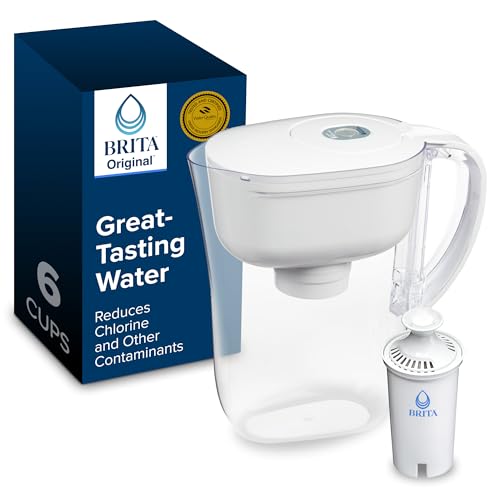
The Brita Metro is a compact, fridge-friendly 6-cup pitcher featuring NSF/ANSI certification. It reduces chlorine taste and odor as well as metals like copper and mercury. A smartLight indicator helps track filter life, with replacements typically needed every 40 gallons or about two months. Best for dorm rooms and compact kitchens where precise timing on filter changes is valuable. Caution: capacity is smaller than larger models, so frequent refills may be needed for bigger households.
PUR 7-Cup Water Filter Pitcher

PUR’s 7-cup pitcher emphasizes strong filtration and convenience. It reduces microplastics and chlorine using a Genuine PUR Filter with advanced 2-in-1 filtration technology. The pitcher is designed for busy homes and offices, offering a space-saving, fridge-ready design and dishwasher-safe components. Best for users who prioritize quick, effective filtration with simple maintenance. Limitation: some users may prefer larger capacities for larger households.
Hydros Water Filter Pitcher
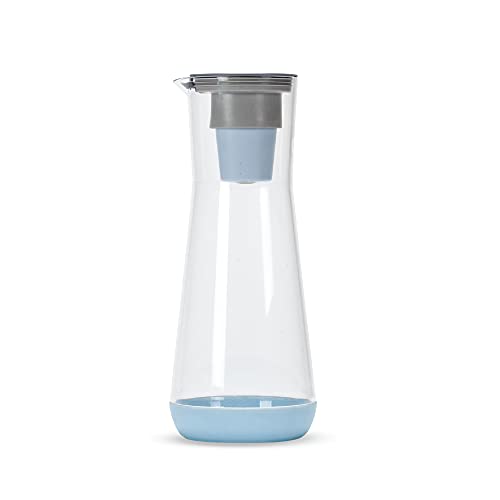
Hydros offers a 5-cup slim pitcher with Fast Flo Tech, designed to filter water up to five times faster than rivals. The filters use natural coconut shell carbon and a BPA-free lining, and the system is NSF 42/Class 1 certified. It removes 99% of sediment and 90% of chlorine, plus other chemicals impacting taste. Best for households needing quick turnover and low plastic usage. Caution: 5-cup capacity may require frequent refills in larger households.
Waterdrop PT-07B Water Filter Pitcher

The Waterdrop PT-07B is a 10-cup pitcher with NSF certification and a long-life 200-gallon filter. It improves coffee and tea taste by reducing PFOA/PFOS and chlorine, and offers a 5x longer filter life for extended use. The hands-free lid design helps maintain hygiene and keeps dust out. Best for larger families or households wanting a longer interval between filter changes. Limitation: larger footprint than some mini-jug alternatives.
Buying Guide
What size do you need?
Consider the number of daily drinkers and available fridge or countertop space. If you frequently refill for several people, a 7- to 10-cup pitcher is more practical. For singles or dorm rooms, 5- or 6-cup options can be ideal.
What certifications matter?
NSF/ANSI 42 and 372 certifications indicate filtration of chlorine, taste and odor, and various contaminants. If reducing microplastics is a priority, look for pitchers explicitly certified for these substances.
How long do filters last?
Filter lifespans vary by model and water conditions. Most offer 200 gallons or a few months between changes. Choose a model with clear indicators or predictable replacement cycles to fit your routine.
Which features improve daily use?
- Hands-free lids and spill-proof designs for convenience.
- Dishwasher-safe components to simplify cleaning.
- Fridge-friendly dimensions for compact setups.
- Indicator lights or apps that remind you to replace filters.
Cost considerations
Initial pitcher price matters, but total cost includes filter replacements. Compare yearly filter costs and the number of gallons per filter to determine long-term value for your household.
Practical checklist
- Is the pitcher compatible with your fridge or counter space?
- Do you need faster filtration or longer filter life?
- Are there any specific contaminants you want to reduce?
FAQ
- Which small water filter jug is best for apartments? Answer: Jugs with compact dimensions and fridge-friendly designs like the Brita Metro or Waterdrop models are well-suited for apartments.
- Do NSF certifications guarantee clean water? Answer: Certifications indicate adherence to standardized filtration performance, not a guarantee but a trusted benchmark.
- How often should I replace filters? Answer: Most pitchers require filter changes every 2 months or after 40 gallons, depending on usage and water quality.
- Can these pitchers reduce microplastics? Answer: Some models, including PUR, offer filtration that targets microplastics, depending on the specific filter combination.
- Is a larger pitcher always better? Answer: Not if counter space is limited; choose a size that fits your daily needs and storage area.
- Are hands-free lids essential? Answer: They improve hygiene and ease of use, especially in busy kitchens and dorm rooms.