Looking for a self-healing cutting board that can handle large sewing, quilting, and crafting projects? This guide compares top 5 self-healing cutting mats ideal for American hobbyists, pros, and educators. Each product is evaluated for density, durability, grid clarity, and compatibility with standard blades. Suitable buyers include quilters needing large surfaces, fabric crafters seeking long cuts, and hobbyists working on multiple-layer projects. Below is a quick reference table to help choose quickly.
| Product | Best For | Size | Key Benefit |
|---|---|---|---|
| Idemeet Density-Upgraded 24″ x 36″ | Large-scale quilters | 24″ x 36″ | High density for longer life |
| Fiskars Self Healing Cutting Mat 24″ x 36″ | General sewing and crafts | 24″ x 36″ | Clear grids with bias lines |
| Idemeet Premium 24″ x 36″ Large | Professional crafters | 24″ x 36″ | Extended scale lines for accuracy |
| WORKLION 24″ x 36″ | Large fabric projects | 24″ x 36″ | Double-sided, durable five-layer build |
| Tujurich 23″ x 35″ | Scrapbooking and sewing | 23″ x 35″ | Double-sided grid, stable surface |
Idemeet Density-Upgraded 24″ x 36″ Self-Healing Cutting Mat

Density: Approximately 2600g for A1 size family mats, designed to enhance self-healing performance and extend service life. It features premium thickened buffer layers beneath the self-healing surface, delivering blade buffering and protecting the work surface. A thickened interlayer provides stronger support and improved crack resistance, helping prevent damage to underlying desks.
Best for: Large-scale quilters and professional crafters who need a sturdy, long-lasting cutting surface for heavy projects. Choose this if you routinely cut multiple layers or heavy fabrics and want enhanced blade protection.
Caution: Heavier mats may be less convenient for one-handed repositioning; ensure sturdy workspace and secure placement before cutting.
anezus Self Healing Sewing Mat, 12×18 Inches

Density: Multi-layer PVC with a white middle core to resist deep cuts, offering resealing surface for continued smooth cutting. It is double-sided and 5-ply, designed for sewing and craft projects of smaller scale but with strong resilience.
Best for: Crafters and hobbyists who work on medium to small projects, quilting small blocks, or pattern drafting. It’s especially handy for portable, space-constrained workspaces.
Caution: Not ideal for very large fabric projects due to its smaller size; best used for 12″ x 18″ work areas.
Fiskars Self Healing Cutting Mat 24″ x 36″

Features: Extra-large cutting surface with a durable double-sided self-healing design. Includes easy-to-read grids with bias lines at 30, 45, and 60 degrees for accurate angle cutting. This mat suits general sewing, crafting, and quilting tasks, offering straightforward usability.
Best for: General sewers and hobbyists who need a reliable, easy-to-read cutting surface for versatile projects. Ideal when large fabric pieces or long strips are common in projects.
Limitation: May be heavier to move around when compared to smaller mats; plan for a stable cutting area where it won’t shift during use.
WORKLION 24″ x 36″ Large Self Healing PVC Cutting Mat
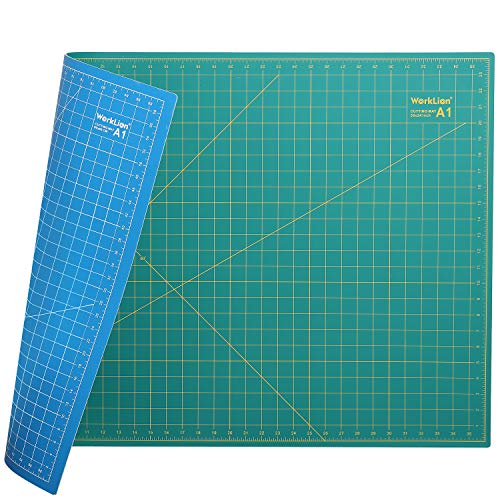
Features: Large A1 size (36×24 inches) suitable for sewing and quilting large pieces. Five-layer construction adds durability and flexibility, with clear inch and metric grid lines and angle guides on both sides for enhanced usability. It’s designed to withstand frequent cutting while protecting surfaces.
Best for: Individuals tackling large fabric projects, vinyl cuts, or wide-format patterns. It offers a robust surface with reliable grid visibility to improve accuracy.
Limitation: The surface density can vary slightly by batch; verify your preferred density level if long-term heavy cutting is anticipated.
Tujurich Self Healing Cutting Mat, 23″ x 35″
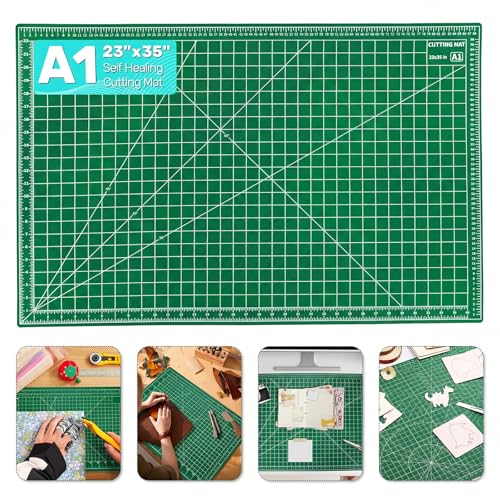
Features: Large, double-sided mat with printable inch grids, angle lines, and guides for precise alignment. Self-healing layer absorbs light cuts to stay smooth, compatible with rotary cutters and straight blades, and designed for sewing, quilting, scrapbooking, and crafts.
Best for: Crafters who need a wide, stable surface with double-sided options for different grid layouts. Particularly useful for versatile sewing and paper crafting workflows.
Caution: Slight variance in grid clarity between sides may occur; confirm side orientation before starting a project to ensure alignment accuracy.
Buying Guide
What size should you choose?
For large sewing and quilting projects, a 24″ x 36″ mat (A1) provides ample cutting space and reduces seam interruptions. Smaller projects may benefit from 12″ x 18″ or 12″ x 9″ mats for portability and storage efficiency.
What density matters?
Higher density mats tend to self-heal more effectively and resist deep cuts, extending the mat’s life and blade safety. Density also influences how well the surface returns to flat after cuts and how well it protects your tabletop.
Double-sided vs single-sided?
Double-sided mats offer more grid options and extended life by distributing wear. They’re useful when you switch between different measurement systems or project types.
Grid visibility and angle guides
Clear grids with 30°, 45°, and 60° lines facilitate precise angle cuts, especially for quilting and pattern drafting. Ensure the grid lines are easy to read under your lighting and that both sides (if double-sided) meet your needs.
Blade compatibility and safety
Look for mats that specify compatibility with rotary cutters and straight blades. A robust interlayer and self-healing surface help protect blades and reduce wear on tools.
Portability vs stability
Assess workspace constraints. Smaller mats are easy to move; larger mats offer more space but require a stable, dedicated cutting area to avoid shifting during use.
Material and durability
Most mats use multi-layer PVC with a self-healing surface. Five-layer or thicker builds provide better durability and crack resistance, especially for frequent, heavy use.
Maintenance and care
Avoid exposing mats to direct heat and harsh chemicals. Use clean, dry surfaces after use, and store mats flat or rolled loosely to preserve the self-healing properties.
Summary of top picks
- Best for large-scale quilting: Idemeet Density-Upgraded 24″ x 36″
- Best value with robust grid readouts: Fiskars 24″ x 36″
- Best for professional crafting workflows: Idemeet Premium 24″ x 36″
- Best for frequent multi-layer projects: WORKLION 24″ x 36″
- Best mobile option for smaller spaces: Tujurich 23″ x 35″
FAQ
- Q: Do I need a double-sided mat? A: Double-sided mats offer more grid options and longer overall life by distributing wear between sides.
- Q: Is a thicker mat always better? A: Thicker mats can be more durable, but weight and portability should also be considered for your workspace.
- Q: How do I protect the blade? A: A self-healing surface and reinforced interlayer cushion the blade, reducing dulling and cutting into the desk.
- Q: Can these mats cut multiple layers at once? A: Yes, many mats are designed to handle multiple-layer cutting, especially large 24″ x 36″ models.
- Q: What grid features are most important for quilting? A: Clear inch grids with 30°, 45°, and 60° bias lines improve accuracy for complex patterns.
- Q: Are there safety considerations when using rotary cutters? A: Always cut away from your body and keep fingers clear of the blade edge; use a stable cutting surface.