The following handheld peelers represent a range of designs, materials, and origins chosen for American kitchens. From traditional stainless steel blades to ergonomic handles and versatile blades, these picks cover everyday peeling tasks, julienne preparation, and durable longevity. Each product highlights build quality, ease of use, and practical value for home cooks and professionals alike. Explore options from Japan, the United States, and Sweden to find the peeler that best fits your cooking style.
| Product | Brand | Origin | Highlights |
|---|---|---|---|
| Nagao Tsubamesanjo Peeler | Nagao | Japan | 18-8 stainless steel, curved blade, dishwasher safe |
| Nagao Peeler Mookie Orange | Nagao | Japan | Compact 3.9″ design, AS resin/stainless, handy boxed |
| Rada Vegetable Peeler | RADA | USA | 1.75″ swiveling dual-edge blade |
| Huakai Stainless Steel Peeler | Huakai | China (manufacturing) | 2-in-1 blades, rotating mechanism, ergonomic grip |
| Titan Julienne Peeler | Titan Peeler | USA | Stainless steel, garnish feature, julienne option |
Whether you prefer a traditional straight blade, need a serrated edge for tougher skins, or want a tool that doubles as a julienne slicer, this list provides diverse options with clear benefits for everyday kitchen tasks and creative plating.
Nagao Tsubamesanjo Peeler

Size: Total length 4.8 inches, blade width 1.6 inches, thickness 0.4 inches. Material: Blade is stainless steel; handle is 18-8 stainless steel. Made in Japan (Tsubame Sanjo). The curved blade design supports easier peeling of round vegetables, with durable stainless construction for longevity and dishwasher compatibility for easy cleanup.
Nagao Peeler Mookie Orange

Size: 3.9 inches (98 mm). Weight: 1.8 oz (50 g). Materials: AS resin and stainless steel with high carbon content. Boxed packaging, designed for compact storage and comfortable handling in everyday peeling tasks.
Rada Cutlery Vegetable Peeler

Features a 1.75″ dual-edge swiveling blade for efficient peeling and versatility. Made in the USA with a silver handle, this peeler emphasizes durability and a straightforward design suitable for left- or right-handed users.
Huakai Stainless Steel Peeler

Design includes 18/8 stainless steel, rust-proof blade and rotating mechanism for seamless peeling. Features a 7.1-inch extended non-slip grip, suitable for both left- and right-handed users, and handles larger produce with ease while maintaining control.
Titan Julienne Peeler
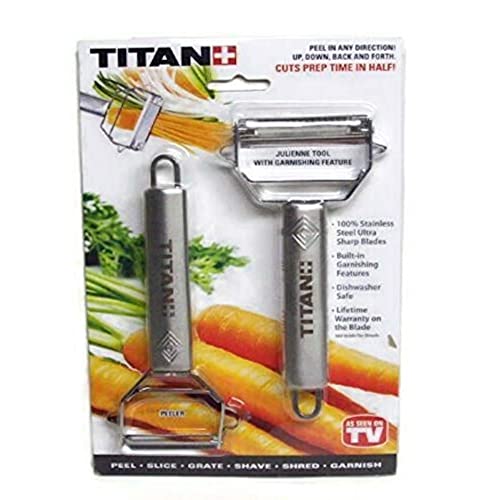
Stainless steel blade with a built-in garnish feature for decorative cuts. A sturdy, long blade length of 7.5 inches and a light 7 ounces weight make it a practical choice for kitchen garnishes and slicing versatility, backed by a robust construction.
Buying Guide: Key Purchase Considerations
Material and blade type: Stainless steel blades offer longevity and ease of maintenance, while dual-edge or rotating blades provide more versatility for peeling and julienne tasks. Consider corrosion resistance, food safety, and how easy the blade is to sharpen or replace.
Ergonomics and grip: An ergonomic handle reduces hand fatigue during extended use. Look for soft-grip textures, ambidextrous design, and blade clearance that fits comfortably in your hand for both big and small tasks.
Blade width and length: Wider blades can speed up peeling larger produce, while slimmer blades excel at delicate skins. A longer handle improves control and leverage for tougher peels.
Special features: Some peelers include built-in julienne blades, garnish options, or rotating blades for mixed tasks. Decide whether you need a dedicated julienne tool or a straightforward peeling option.
Maintenance and dishwasher compatibility: Dishwasher-safe designs simplify cleanup, but hand washing can extend blade life. Consider whether the blade and handle materials resist rust and staining.
Origin and craftsmanship: Some users value region-specific craftsmanship (e.g., Japan’s knife and tool traditions) for durability and precision, while others prioritize American or European design for availability and warranty considerations.
Price-to-value: Compare the core peeling performance, comfort, and longevity. A slightly higher upfront cost may yield a longer-lasting tool with better ergonomics and maintenance efficiency.
Usage diversity: If you frequently prepare garnishes or julienne cuts, prioritize a peeler with an integrated garnish blade. For everyday peeling, a simple, stable design might be sufficient.
Storage and care: Consider compact, easy-to-store designs for small kitchens. Ensure your chosen peeler fits in your drawer or utensil c tray and doesn’t require special storage conditions.