Finding the right non stick absorbent pad can speed healing and reduce pain during dressing changes. This guide highlights five reliable options, each suited to different wound types and care needs. Whether you need sterile pads for minor wounds, heavy-drainage ABD pads for thick exudate, or smaller non-stick dressings for delicate skin, the selections below help you compare at a glance. The buyer-friendly format includes who each product is best for and practical cautions to consider.
Summary table of selected products
| Product | Size | Best For | Caution |
|---|---|---|---|
| MED PRIDE Sterile Non Stick Pads | 3×4 in | Wounds needing painless removal | Non-adhesive; check wound exudate level |
| CURAD Sterile Non-Adherent Dressing Pads | 3×4 in | Light to moderate drainage, quick changes | Single-use; inspect film perforations |
| GauzeCare Sterile Abdominal Pads | 5×9 in | Heavy drainage, larger wounds | May require trimming to fit |
| Curad Non-Stick Pads (2×3 in) | 2×3 in | Small cuts, scrapes, post-op care | Smaller size may not cover larger wounds |
| Band‑Aid Absorbent Cushion Care Pads | 4×4 in | Minor to moderate wounds with fluid | Non-adhesive; ensure proper fit |
MED PRIDE Sterile Non Stick Pads For Wounds

Product overview: MED PRIDE non-stick wound pads are designed for painless removal and effective absorption. The pads are sterilized, individually wrapped, and suited for mildly exuding wounds, including stage II and III wounds, cystic acne, burns, ulcers, post-op wounds, and dermatitis. The key benefit is reducing pain during dressing changes while promoting healing. Better for users prioritizing comfort and sterilized protection during wound care. A potential limitation is the need to monitor exudate level to determine if a larger or thicker pad is required.
Best for: Those needing painless dressing changes and reliable sterilization for small to medium wounds. Why selected: Combines sterilization with non-stick design and absorbency, suitable for sensitive skin and frequent dressing changes.
CURAD Sterile Non-Adherent Dressing Pads
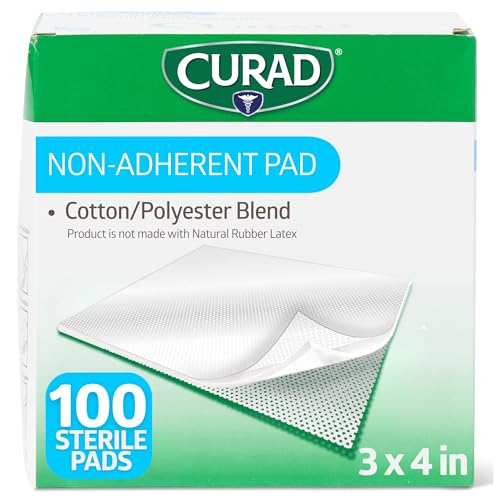
Product overview: CURAD’s sterile non-adherent dressing pads are designed to avoid sticking to granulating tissue. They are absorbent and allow air circulation, with the ability to be cut to fit shapes. This makes them versatile for various wound shapes and sizes. A potential limitation is that larger or more heavily exudating wounds may require thicker or multiple pads for adequate coverage.
Best for: Wounds where sticking to tissue should be avoided and easy contouring is needed. Why selected: Non-adherent, breathable, and easily cut to shape, which helps with comfort and wound hygiene.
GauzeCare Sterile Abdominal Pads 5×9

Product overview: These pads offer thick, extra-absorbent protection with a non-stick outer layer. Each pad is individually sterile-packed, designed to wick moisture away while maintaining a non-adherent surface for pain-free removal. They are well-suited for heavy drainage and larger wounds. Limitation: the size may require trimming to fit certain wound areas or dressings.
Best for: Heavy-drainage wounds and first-aid kits needing robust absorption. Why selected: High absorbency and non-stick outer layer help reduce maceration and skin trauma during dressing changes.
Curad Non-Stick Pads 2×3 Inch
Product overview: This Curad pad features an ouchless non-stick layer combined with a breathable, absorbent core. It is designed to minimize moisture on healing wounds and can be cut to fit irregular shapes. A caveat is that the smaller size may not cover larger wounds, requiring additional pads for adequate coverage.
Best for: Small cuts, scrapes, and post-operative sites where a compact dressing is ideal. Why selected: Easy to trim and non-stick, making it accessible for rapid wound coverage.
BAND-AID Brand Absorbent Cushion Care Pads

Product overview: BAND-AID Absorbent Cushion Care pads are large, non-adhesive gauze pads designed for minor wounds, scrapes, and burns. They utilize Quilt-Aid technology to wick away fluids and provide cushioned protection. The non-adhesive design minimizes trauma during removal. A limitation is that very large or heavy-drainage wounds may require multiple pads or thicker options.
Best for: Protecting larger minor wounds with reliable absorption. Why selected: Combines high absorbency with a cushion layer for comfortable healing and easy removal.
Buying Guide: Key Considerations For Choosing Non Stick Absorbent Pads
- Wound type and drainage level: Lightly to moderately draining wounds benefit from sterile non-adherent pads, while heavy drainage may require thicker ABD pads.
- Pad size and coverage: Match pad dimensions to wound area. For irregular shapes, consider pads that can be cut to fit.
- Material and non-stick surface: A soft non-woven outer layer helps prevent sticking, reducing pain during dressing changes.
- Sterility and packaging: Individually wrapped sterile pads reduce contamination risks and simplify storage.
- Skin sensitivity: For sensitive skin, prioritize non-adhesive, breathable designs to prevent irritation.
- Flexibility and fit: Pads should stay in place without excessive adhesive; consider wrap-around or fully non-adherent options for mobility.
- Usage context: Choose smaller pads for first-aid kits and larger ABD pads for wound care in clinical or home settings.
FAQ
- What is the main difference between non-stick and non-adherent pads?
Non-stick pads resist sticking to the wound, while non-adherent pads often have a non-stick outer layer to minimize tissue adherence. - Can I cut wound pads to fit irregular wounds?
Yes. Several pads are designed to be cut to fit shapes without compromising their sterile barrier. - Are larger pads always better for wounds?
Not always. Choose pad size based on wound area and exudate; overly large pads can be unnecessary and bulky. - When should I replace a wound pad?
Replace when saturated with fluid, soiled, or if it begins to stick to the wound. - Which pad is best for heavy drainage?
ABD pads with higher GSM density and a non-stick outer layer are typically best for heavy drainage. - Do sterile pads expire?
Yes. Always check the packaging for the sterilization date and storage recommendations.