Finding the right mixer for dough kneading involves reviewing power, capacity, kneading action, and ease of use. The following picks represent a range of popular options that balance motor strength, bowl size, and practical features like fermentation, tilt-head design, and digital controls. This guide highlights five top performers to help you choose a machine that reliably handles bread, pizza dough, and pastry dough in a home kitchen.
| Product | Brand | Bowl Capacity | Key Feature |
|---|---|---|---|
| Aucma Stand Mixer | Aucma | 6.5 QT | 660W motor, tilt-head |
| VONCI Electric Dough Maker | VONCI | 7.3 QT | Fermentation & timer |
| Dough Maker With Ferment Function | AIZIYO | 5 QT | Ferment function, user-friendly touch panel |
| Dough Maker With Ferment Function 7.4QT | HaiiuzHi | 7.4 QT | Automatic fermentation |
| Bosch Universal Plus Stand Mixer | Nutrimill | 6.5 QT | Strong belt drive, versatile attachments |
Below are concise, objective profiles of five strong options for dough kneading, spanning a mix of capacity, features, and price-friendly designs. Each entry includes a brief overview, notable strengths, and what to consider when deciding which model matches your kitchen workflow.
Aucma Stand Mixer: Power, Capacity, and Style

The Aucma 6.5-quart stand mixer combines a robust 660W copper motor with a durable ABS housing and a tilt-head design for easy bowl access. Six speeds plus a pulse function support a range of doughs and batters, from thick bread dough to whipping creams. The 6.5QT stainless steel bowl features dual handles for stable pouring and lifting. A blue LED power indicator adds a subtle kitchen accent while clearly signaling operation. The motor remains comparatively quiet for a high-powered mixer, with noise levels listed around 76dB, which is helpful in open-plan spaces. This model emphasizes versatility and user-friendly operation for home bakers who run multiple dough recipes.
Strengths: High motor power relative to size, versatile speed control, generous capacity, tilt-head access for quick bowl changes. Considerations: No dedicated fermentation features; higher wattage can draw more power; some users may want more advanced timer controls.
VONCI Electric Dough Maker With Ferment Function

The VONCI dough maker combines kneading and proofing in a single unit with a 7.3-quart stainless steel bowl and a 200W motor. It features a microcomputer-controlled kneading and fermentation cycle, with a default knead time of 15 minutes and proofing time of 90 minutes. The spiral dough-kneading structure mimics manual kneading to produce a more elastic dough. An intuitive one-button operation streamlines everyday use, while non-slip suction feet help reduce vibration for stable operation on busy counters. It’s well-suited for large-batch bread, pizza dough, or noodles for family gatherings.
Strengths: Built-in fermentation, large capacity, straightforward operation. Considerations: Moderate motor power; fermentation precision depends on ambient temperature; some bakers may prefer a higher power model for very dense doughs.
Dough Mixer With Ferment Function 5QT (AIZIYO)

The AIZIYO 5-quart dough mixer emphasizes a compact footprint with an all-in-one approach. It includes a dedicated fermentation function that allows dough to rise before baking. The 304 stainless steel bowl supports safe, hygienic food preparation, and a face-up touch control panel makes adjustments accessible without bending. This model is ideal for daily pizza dough, roti, and bread batches where a smaller footprint is preferred without sacrificing fermentation capability.
Strengths: Fermentation integration, hygienic stainless steel bowl, user-friendly touch controls. Considerations: Smaller capacity than some peers; power and kneading speed are suited for typical home doughs rather than very large batches.
Dough Maker With Ferment Function 7.4Qt (HaiiuzHi)

The HaiiuzHi dough maker features a 7.4-quart capacity and a 250W motor designed for mixed dough tasks, including bread and pizza dough. It highlights automatic fermentation and a large capacity suitable for gatherings. While the 250W motor is modest compared to some high-powered models, the machine’s fermentation and user-friendly touch panel provide practical benefits for routine dough production. This option is suitable for mid-sized households and small bakeries looking for reliable dough kneading with fermentation in a single appliance.
Strengths: Larger capacity, fermentation function, intuitive controls. Considerations: Power may be lower than industrial-grade mixers; performance may vary with very dense doughs; ensure it fits your counter space given the footprint.
Bosch Universal Plus Stand Mixer
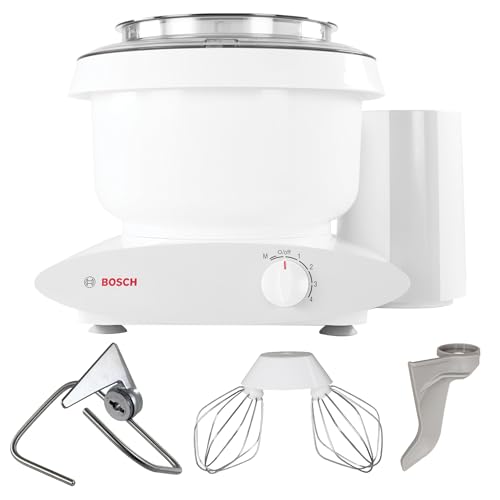
The Bosch Universal Plus offers a diverse feature set with a 6.5-quart BPA-free plastic bowl and a bottom-drive system that facilitates ingredient addition during mixing. Its belt-driven transmission is designed to deliver torque for heavy dough tasks, including kneading up to 14 loaves of whole-grain bread dough in a single batch. Dual beaters provide extended whipping capabilities, while the design emphasizes durability and versatility, making it a strong choice for bakers who routinely switch between bread, cookies, and whipped toppings.
Strengths: Powerful torque for large batches, flexible attachments, easy to clean bowl. Considerations: Plastic bowl may feel lighter than stainless options; some users may prefer quieter operation in open layouts; higher upfront cost typical for Bosch models.
Hamilton Beach Electric Stand Mixer

The Hamilton Beach 4-quart mixer focuses on practical, space-efficient design with a 300W motor capable of handling thick doughs while maintaining a stable speed. It includes a dough hook, flat beater, and a whisk with a splash guard, offering comprehensive attachments for kneading, mixing, and whipping. Planetary mixing action provides thorough bowl coverage, helping achieve consistent textures across recipes such as pizza dough, cookies, and cake batters. The compact footprint makes it a practical option for smaller kitchens or as a starter mixer for hobby bakers.
Strengths: Stable performance with thick doughs, complete attachment set, compact size. Considerations: Smaller bowl capacity; less suited for very large batches; some users may prefer more powerful models for dense doughs like sourdough starters in bulk.
Buying Guide: Key Purchase Considerations
- Capacity and batch size: Choose a bowl that fits your typical dough quantities. 5–7 QT covers most family baking needs; larger families or frequent large-batch projects may benefit from 7–10 QT options.
- Power and dough handling: A higher wattage helps with dense doughs but evaluate motor design. For frequent bread or pizza dough, look for at least 500–700W equivalent power, and a robust gear drive or belt system to prevent bogging down.
- Kneading and fermentation features: Some models integrate fermentation or proofing cycles, which can simplify sourdough, bread, or other dough workflows. Consider whether you need timed kneading or automated fermentation for consistency.
- Controls and accessibility: Tilt-head designs provide easy bowl access. Look for intuitive controls, digital timers, and clear indicators, especially if you bake on a schedule or involve multiple members in the process.
- Attachment versatility: A good mixer supports a range of attachments—dough hooks, beaters, whisks, and optional specialty accessories. Assess compatibility with other brands if you plan to upgrade attachments later.
- Maintenance and cleanup: Stainless steel bowls are easier to clean and more durable than plastic bowls in some models. Dishwashable components save time but verify care instructions for each part.
- Space and noise: Consider the footprint and noise level, especially in open-plan homes. Some powerful models run louder; look for units with noise-reduction engineering if possible.
- Price-to-performance balance: Higher-end units tend to offer stronger long-term performance and larger capacities. For occasional home bakers, mid-range options provide reliable kneading without premium pricing.
- Warranty and support: Check the manufacturer’s warranty duration and service networks. Longer coverage can be advantageous for durable kitchen appliances used often for dough work.