Need reliable high-temperature hose insulation to protect hoses, wiring, and fuel lines from extreme heat? This guide highlights five top options designed for harsh automotive and industrial environments. Each product targets different setups, from compact, tight spaces to extended sleeves for heavy-duty protection. Read on to find which sleeve or sleeving kit best matches your heat-management needs, whether you’re a professional technician or a DIY enthusiast.
Summary of chosen products
| Product | Best For | Key Benefit |
|---|---|---|
| YAMAKATO 1/2″ ID Fire Shielded Sleeve | Compact engine bays and tight routing | High heat tolerance with silicone coating, flexible for small spaces |
| Design Engineering Heat Sheath 3/4″ I.D. | Hoses, lines and wires needing radiant heat reflection | Reflects up to 2000°F, protective against oil and debris |
| YAMAKATO 1″ ID Fire Shielded Sleeve 3 ft | Mid-size automotive lines and wiring | Silicone-coated fiberglass with robust clamps |
| BSTFLEX 10mm – 3/8″ Aluminum Sleeve 39″ | General high-temperature protection for longer runs | Aluminum foil exterior, versatile side-entry sleeve |
| BSTFLEX 1/4″ ID Fire Sleeve 5 ft | Small-diameter lines and wiring bundles | Low-profile, VW-1 rated, silicone-coated fiberglass |
YAMAKATO 1/2″ ID Heat Shielded Fire Sleeve

Reference features: ID 1/2″ (12.7mm), length 5 ft (1.52 m). Stainless steel hose clamps fit 13–19mm inner diameter. Continuous exposure from -65°F to +500°F (-54°C to +260°C), up to 2000°F (1093°C) for 15–20 minutes, or up to 3000°F (1650°C) for 15–30 seconds. Inner sleeve is fiberglass with a silicone coating. VW-1 flammability. Insulation silicone layer provides abrasion protection and easy cleaning. Suitable for brake lines, fuel lines, wiring harnesses, and cables.
Best for: Small to mid-size engine bays where tight routing is needed and a flexible, silicone-coated sleeve helps protect wires and hoses from radiant and contact heat. This is a balanced choice for workshops needing a robust sleeve with reliable clamps.
Caution: Silicone coating may have a slight odor at high temperatures; ensure adequate ventilation in enclosed spaces.
Design Engineering Heat Sheath Aluminized Sleeving – 3 ft

Reference features: 3/4″ I.D., 3 ft length. Extreme heat and abrasion protection for hoses, lines, and wires. Reflects radiant heat up to 2000°F while withstanding direct heat up to 500°F. Protects against oil, chemicals, and debris commonly found in automotive and industrial settings.
Best for: Applications that encounter high radiant heat. This sleeve is ideal for scenarios where reflecting heat away from sensitive components helps maintain cooler operating temperatures and reduces wear on hoses and cables.
Limitation: Longer runs may require additional segments or overlap strategies to cover the entire length effectively.
YAMAKATO 1″ ID Fire Shielded Sleeve – 3 ft
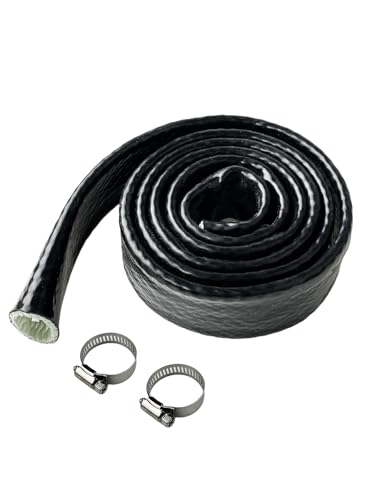
Reference features: ID 1″ (25mm), length 3 ft (0.92 m). Hose clamps fit 32mm inner diameter. Temperature range -65°F to +500°F continuous, up to 2000°F for 15–20 minutes, up to 3000°F for 15–30 seconds. Inner sleeve fiberglass, silicone coating. VW-1 flammability. The sleeve’s silicone layer offers abrasion protection and reusability for brake lines, fuel lines, wiring harnesses, and cables.
Best for: Mid-size components that require a sturdier sleeve with a larger diameter than the 1/2″ option while maintaining manageable length for shorter routes in automotive or industrial settings.
Caution: High-temperature spikes can still exceed continuous ratings; design for expected heat exposure and consider supplemental protection if near direct flame sources.
BSTFLEX 10mm – 3/8″ Aluminum Sleeve

Reference features: Working temperature -40°C to +150°C. Heat insulation performance ≥100°C. Side-entry sleeve with 25% overlap; composed of aluminum foil, fiberglass, and polyester. Suitable for heat insulation of hoses, wire harnesses, cables, and general high-temperature applications. Includes 39″ (1 meter) length and is useful for automotive and industrial use with oil resistance.
Best for: General high-temperature protection where aluminum reflects heat and a durable, side-entry design accommodates multiple bundles like hoses and wiring. It is a versatile choice for longer runs or multi-bundle applications.
Limitation: Aluminum-based sleeves can be less flexible in very tight bends compared to silicone-coated fiberglass sleeves.
BSTFLEX 1/4″ ID Aluminum Heat Reflective Sleeve – 39″
Reference features: ID 1/4″ (6mm), length 39″ (1 meter). Working temperature -40°C to +150°C. Heat insulation ≥100°C. Side-entry sleeve with 25% overlap; material includes aluminum foil, fiberglass, and polyester. Applicable to high-temperature protection for cable harnesses, hoses, wiring, engine components, and other automotive or industrial uses. Adhesive heat sleeve option mentioned for secure installation.
Best for: Small-diameter lines and wiring bundles where a compact, durable aluminum sleeve is desired. It’s well suited for tight spaces and shorter runs in engines or machinery.
Note: Silicone-based sleeves may have odor under high-temperature exposure; this is typical for some fiberglass-silicone products.
BSTFLEX 1/4″ ID Fire Sleeve 5 ft

Reference features: Inner diameter 1/4″ (6mm), length 5 feet (1.5 m). Silicone-coated fiberglass with flexible design. Rated for continuous exposure up to -60°C to +260°C, up to 260°C continuous. VW-1 flammability. Best used to protect hoses, wires, fuel lines, and hydraulic lines under high heat conditions in compact configurations. The silicone coating provides abrasion protection and easy cleaning.
Best for: Lightweight, compact protection where space is restricted but a dependable heat shield is necessary for wiring and small hoses.
Limitations: Manual size estimation means potential rounding errors; verify exact diameter fit for your equipment to avoid slips or overlaps.
Buying Guide: High-Temperature Hose Insulation Essentials
What heat range do you need?
Match insulation to the expected maximum temperature. Continuous exposure ratings matter for daily operation, while short-term spikes may require higher transient ratings. Consider the environment: radiant heat, direct flame exposure, and proximity to hot components all influence the right choice.
What diameter and length fit your bundles?
Measure the inner diameter of hoses or wiring bundles to select the correct sleeve size. Side-entry sleeves ease installation on longer runs or areas with multiple bundles. For tight spaces, smaller IDs and shorter lengths are often the best fit.
Material and protection features
Common materials include fiberglass with silicone coatings, aluminized sleeves, and aluminum-based reflective sleeving. Silicone coatings offer abrasion resistance and cleaning ease; aluminized layers reflect radiant heat and help maintain cooler components. Consider oil and chemical resistance when in automotive contexts.
Installation considerations
Hose clamps sized to the sleeve diameter help secure protection in place. Overlaps, seam placement, and the use of end caps can improve coverage. Some sleeves allow for adhesive or zip-tie methods in addition to clamps.
Durability and maintenance
Look for VW-1 flammability rating and compatibility with cleaning agents. Reusability and resistance to abrasion extend service life in demanding environments. Consider how easy it is to inspect and replace worn sections during maintenance.
Best practice recommendations
- Choose a sleeve that provides both heat reflection and physical protection for the specific application.
- Prefer sleeves with clamps or secure fastening for reliable retention in vibration-prone environments.
- Consider combining sleeves for longer runs or highly exposed sections to maximize protection.
Quick comparison at a glance
- Best for tight spaces: YAMAKATO 1/2″ ID Fire Sleeve
- Best for radiant heat reflection: Design Engineering Heat Sheath 3/4″ and 1/2″ options
- Best all-around durability: BSTFLEX Aluminum Sleeves (3/8″ and 1/4″ IDs)
- Most compact option: BSTFLEX 1/4″ ID 39″ Sleeve for small bundles
FAQ
- What is high-temperature hose insulation used for?
- Which sleeve is best for automotive wiring?
- Can these sleeves withstand radiant heat from exhaust systems?
- Do these sleeves require special tools or clamps for installation?
- Are there health considerations when installing silicone-coated sleeves?
Answers: High-temperature hose insulation protects hoses, wiring, and lines from heat damage, radiant heat, and abrasion in automotive and industrial settings. For automotive wiring, silicone-coated fiberglass sleeves offer flexible, protective coverage, while aluminized sleeves excel at radiant heat reflection. Most installations require standard hose clamps or zip ties; no specialized tools beyond basic fasteners are typically needed. When installing silicone-coated sleeves, ensure proper ventilation to manage any odor during heating or bonding. Regular inspection helps identify wear or damage and schedule replacements as needed.