Answering the need for durable, heat-resistant plastic bottles, this guide highlights five reliable options across consumer and lab uses. Each product is described with who it’s best for, why it stands out, and a practical caveat. Ideal for buyers seeking BPA-free safety, hot and cold beverage compatibility, or reliable storage for reagents and condiments.
Summary Table of Chosen Products
| Product | Best For | Key Feature |
|---|---|---|
| EONJOE 12pk 16oz Bottles | Families and meal prep | Dishwasher and freezer safe; heat-resistant |
| United Scientific Reagent Bottle 1000ml | Lab use and classrooms | Wide mouth; leak-proof seal; autoclavable |
| High Temp Milk Bottle 500ML | Hot drinks storage | High temperature resistance; leak resistant |
| Mrsdry Silicone Squeeze Bottles 12oz | Condiments and sauces | Food-grade silicone; interchangeable lids |
| LabStable 16.9OZ Reagent Bottle 4PCS | Chemical and liquid storage | Wide mouth; temperature range to -50°C–120°C |
EONJOE 12pk 16oz Dishwasher Safe Plastic Bottles

These BPA-free bottles are made from food-grade PP5 plastic, offering peace of mind for daily use with drinks and meals. They are designed to be dishwasher safe and freezer safe, simplifying cleanup and storage. Capable of handling both hot and cold beverages, they’re versatile for smoothies, milk, or water bottles around the household.
Best for families and routine meal prep where convenience and safety matter. The bottles’ dishwasher and freezer compatibility reduces handling and cleanup time. A potential limitation is that they rely on a standard cap design, which may limit customization with accessories beyond basic use.
United Scientific Reagent Bottle, 1000ml Wide Mouth
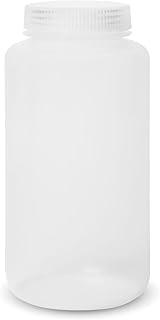
This 1-liter polypropylene bottle features a wide mouth for easy filling and cleaning, making it suitable for powders, viscous liquids, and classroom or lab storage. It includes integrated seal rings for a reliable, leak-proof closure and is BPA and phthalate free, RoHS compliant.
Best for laboratory teams, science classrooms, and hobbyists who need large-capacity storage with a secure seal. Limitation: designed for more controlled, infrequent dispensing rather than precise dosing of small volumes.
High Temperature-Resistant Milk Bottle, 500ML

This bottle emphasizes heat resistance suitable for hot drinks and milk storage, aligning with scenarios where beverages remain warm or hot for longer periods. It’s designed for durability in everyday-kitchen use and helps reduce the risk of cracking when exposed to temperature changes.
Choose this if you need a single-container option for hot beverages and milk storage. Caution: exact heat tolerance specifications are not listed here; verify with product details for your intended temperature range and duration.
Mrsdry 12oz Silicone Squeeze Bottles 4 Pack

These silicone squeeze bottles are designed for sauces, oils, and dressings. They come with interchangeable lids (thin tip for oils and thick tip for sauces) and feature measurement markings in both oz and mL, aiding precise dispensing.
Best for cooks and organizers who need flexible squeeze bottles with precise measurement. Limitation: silicone bottles can be more prone to dents if dropped compared to rigid plastics; handle with care to maintain a tight seal.
LabStable PP Wide-Mouth Reagent Bottle, 4PCS
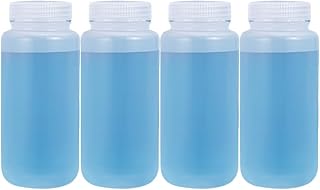
This set includes 16.9-ounce (500 ml) PP wide-mouth bottles designed to be leak-proof with secure cap closures. They withstand temperatures range from -50°C to 120°C and resist acids and bases, making them suitable for various lab storage tasks and chemical sampling.
Best for consistent lab workflows requiring a secure seal and broad temperature tolerance. Limitation: intended for laboratory use; consumer-handling convenience may be secondary to scientific compliance in some contexts.
Buying Guide: Key Considerations For Heat Resistant Plastic Bottles
What will you store and how hot will it get?
Assess whether you need bottles for hot beverages, cold drinks, or chemical storage. Look for temperature ratings, material type (PP for polypropylene), and whether the container is rated for heat or cold extremes. For lab use, prioritizing chemical resistance and a wide temperature range is essential.
Safety and material quality
Opt for BPA-free and phthalate-free designs when using bottles with food or beverages. For lab settings, ensure the material (PP) is certified for autoclave use or meets relevant safety standards for reagents and samples.
Convenience features
Dishwasher safe, wide-mouth designs for easy filling, and leak-proof caps are practical. For sauces and condiments, silicone squeeze bottles offer precise dispensing with measurement marks.
Capacity and form factor
Consider whether you need large 1-liter bottles for liquids or smaller 500 ml to 16.9 oz options for daily use. Wide-mouth designs simplify pouring and cleaning, especially with viscous liquids or powders.
Durability and handling
Rigid plastic tends to be more dent-resistant in busy environments, while silicone provides flexibility at the expense of potential compression under pressure. Choose according to handling conditions and storage needs.
Maintenance and compatibility
Dishwasher compatibility simplifies cleaning, and compatibility with existing lids and caps can matter for ongoing use. In lab contexts, ensure seal rings and caps provide reliable leakage prevention in transport and storage.
Practical decision matrix
- Best for: Home use, hot and cold beverages — choose heat-resistant, dishwasher-safe PP bottles.
- Better for: Lab classrooms and sample storage — choose wide-mouth, autoclavable, leak-proof designs.
- Choose this if: You need precise dispensing or measurement, such as sauces or reagents with marked volumes.
- Avoid this if: You require ultra-detailed chemical resistance beyond listed capabilities; verify compatibility with specific reagents.
How to choose by scenario
For daily kitchen hydration and meal prep, a BPA-free high-temperature resistant bottle is suitable. For science or education settings, wide-mouth and leak-proof containers are preferable. For condiments and oils, silicone squeeze bottles with interchangeable tips provide the best control. For laboratory storage of reagents and samples, select bottles with secure seals and robust temperature tolerance.
Maintenance tips
- Regularly inspect seals and caps for wear to prevent leaks.
- Label bottles clearly with contents and date when used for storage or experiments.
- Follow manufacturer guidance on dishwasher safety and temperature limits to prolong life.
Frequently asked questions
- Are heat-resistant plastic bottles safe for hot beverages? Yes, when labeled for high-temperature use and made from suitable plastics like PP with heat tolerance.
- Can these bottles store chemicals safely? Some are designed for lab use with leak-proof closures; always check chemical compatibility before use.
- Is BPA-free enough for safety? BPA-free is a key safety feature for food-contact bottles, though other additives may also be of concern depending on use.
- Do all wide-mouth bottles leak-proof? Most include a seal ring or secure cap; verify the specific product’s sealing design before transport.
- Is dishwasher use acceptable for lab bottles? It depends on the product; some lab bottles are dishwasher safe, but many lab items require hand cleaning or specific sterilization methods.
- Which bottle is best for precise dispensing? Silicone squeeze bottles with measurement markings and dual-tip lids offer precise control for sauces and oils.