Answering the search for a food-safe butcher block finish, this guide compares five top products ideal for protecting cutting boards, butcher blocks, bowls, and other food-contact wooden surfaces. Each option aims to prevent drying, cracking, and warping while maintaining a clean, natural look. Best for home cooks with daily cutting board use, hobby woodworkers seeking reliable food-grade protection, and households prioritizing easy maintenance. Below is a quick buyer-friendly summary, followed by detailed product profiles and a practical buying guide.
| Product | Best For | Why It Stands Out |
|---|---|---|
| Watco 16 Oz. Butcher Block Oil & Finish | Daily-use cutting boards and butcher blocks | Combination oil and finish for protection and appearance |
| Howard Products Butcher Block Conditioner | Hardwood surfaces prone to drying and cracking | Revitalizing wax/oil blend for deep conditioning |
| Thirteen Chefs Mineral Oil – 8 oz | Food-contact surfaces requiring pure mineral oil | NSF certified, colorless and tasteless protection |
| Kate Naturals Mineral Oil | Low-residue oil for frequent use surfaces | Clear, odorless, tasteless; easy absorption with no greasy film |
| Watco Butcher Block Oil + Stain | Wood surfaces needing color and protection | Stain plus durable, food-contact-safe finish |
Watco 16 Oz. Butcher Block Oil & Finish
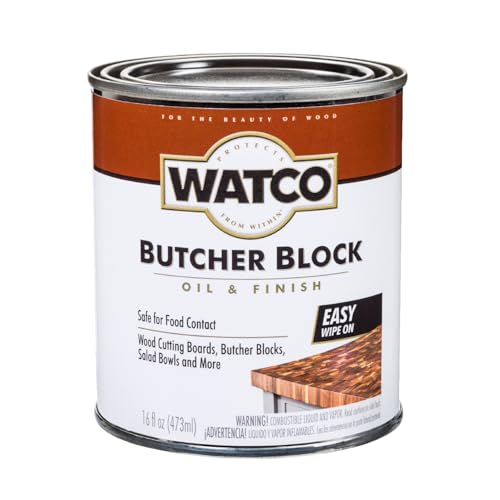
Watco’s Butcher Block Oil & Finish combines conditioning oil with a protective finish, simplifying maintenance for cutting boards and butcher blocks. The product is marketed as a US-made option, making it attractive for buyers who prefer domestically produced wood care products. This finish is designed to penetrate wood fibers while providing a surface seal, which can help resist moisture during daily kitchen use. Best for kitchen renovators who want a one-step application and for hobbyists who favor a straightforward maintenance routine. Caution: the finish may require thorough curing time to achieve the full protective effect.
Who it’s best for: homeowners seeking a convenient, all-in-one solution for daily use boards and blocks. Why selected: its dual function reduces the number of products needed, and the US-made claim can reassure buyers prioritizing domestic sourcing. Limitation: specific cure times and long-term wear data are not provided in the product description.
Howard Products Butcher Block Conditioner

The Howard product combines natural waxes and mineral oil to provide a protective barrier that helps prevent drying and cracking in hardwoods and bamboo. It’s especially suitable for salad bowls, wooden spoons, and wooden toys that come into frequent contact with hands and food. Best for: households needing a robust, long-lasting conditioner that also adds a gentle shine. Better for: surfaces that see regular washing or wet contact, due to the wax content. Limitation: some users may prefer a lighter oil for very porous woods or for odor-sensitive environments.
Who it’s best for: families with frequent use boards and utensils that benefit from a durable, wax-in-oil blend. Why selected: the wax layer adds extra protection beyond oil alone, and the product is marketed as food-safe when fully cured. Caution: wax-based conditioners can require periodic reapplication to maintain depth of protection.
Thirteen Chefs Mineral Oil – 8 oz

Thirteen Chefs Mineral Oil is NSF certified and designed for food-contact surfaces such as cutting boards, butcher blocks, and countertops. It is colorless, odorless, and tasteless, making it ideal for neutral preservation of wood without altering the food’s flavor. Best for: budget-conscious cooks who want a reliable, pure mineral oil. Better for: surfaces that require a quick-absorbing, no-residue finish. Limitation: mineral oil alone does not harden wood; periodic reapplication is needed to maintain moisture protection.
Who it’s best for: individuals seeking a straightforward, lab-tested food-grade oil. Why selected: NSF certification and pure mineral oil provide a transparent basis for food-safety claims. Caution: does not offer wax-based protection, which might be preferred for some high-use items.
Kate Naturals Mineral Oil

Kate Naturals Mineral Oil for wood surfaces emphasizes light absorption and easy rubbing without leaving an oily residue. It is colorless, odorless, and tasteless, meeting food-safety standards for boards, utensils, bowls, and rolling pins. Best for: kitchens needing a clean, quick-absorb formula that doesn’t alter the wood’s natural tone. Better for: users who dislike any trace of greasy film after application. Limitation: some woods with pronounced pores may appear drier if oil is not reapplied regularly.
Who it’s best for: health- and odor-sensitive households that require a minimalist oil. Why selected: the product is pitched as colorless and tasteless with a focus on clean absorption. Caution: may require more frequent applications on very dry or porous woods to maintain moisture protection.
Watco Butcher Block Oil + Stain

Watco’s Oil + Stain blends a protective oil with a durable stain to enrich color while sealing the wood’s surface. It’s suited for butcher blocks and interior wood surfaces that benefit from both color enhancement and food-contact safety once fully cured per 21 CFR 175.300. Best for: projects where a deeper, richer tone is desired without sacrificing food safety. Better for: surfaces that require a more visible grain and color. Limitation: color enhancement requires curing time and may alter the wood’s natural look for some preferences.
Who it’s best for: crafters and homeowners wanting a stained, food-safe finish in one step. Why selected: combines color and protection, addressing both aesthetic and functional needs. Caution: verify cure time and ensure full dryness before food contact to stay within safety guidelines.
Buying Guide: Key Purchase Considerations
What is the primary use?
Choose a product that aligns with daily use boards and high-contact surfaces. For routine maintenance, an oil-only option keeps wood nourished. If you expect heavier wear, a conditioner with wax can provide longer-lasting protection.
Is the product food-safe when cured?
Look for explicit food-safe claims and, if possible, NSF certification. Ensure the product is fully cured before first use on any surface in contact with food.
Oil vs. oil plus stain or wax
Oil finishes penetrate and nourish wood. Wax adds a surface seal; wax plus oil extends protection but may require periodic reapplication. Stain adds color; test on a hidden area to confirm the final appearance.
Ease of application and curing time
One-step oils are convenient but may require more frequent reapplication. Finish-and-stain products can reduce maintenance but need longer curing times. Always follow manufacturer instructions for cure time and ventilation.
Support for different woods
Some products are formulated to work across hardwoods, bamboo, and softwoods. If you have multiple cutting boards or utensils, a versatile option is advantageous.
Safety and sourcing considerations
Domestic manufacturing can be appealing for some buyers. Check for clear labeling, absence of solvents beyond necessity, and non-toxic packaging. Consider the long-term availability of the product you choose.
FAQ
- Can I use mineral oil on all wooden cutting boards? Yes, mineral oil is widely used for cutting boards, counters, and butcher blocks, provided it is food-grade and fully absorbed without leaving a greasy film.
- Is it necessary to oil a butcher block weekly? Frequency depends on usage and wood porosity. Porous woods may require more frequent applications to prevent drying and cracking.
- What does NSF certified mean? NSF certification indicates the product meets specific food-safety standards and testing for materials intended to contact food.
- Should I use wax-based conditioner on a cutting board? Wax can provide longer-lasting protection but may require periodic reapplication and can feel waxy on some surfaces.
- Can I stain my butcher block and still keep it food-safe? Yes, using a stain designed for wood with a food-safe finish after cure is possible, but ensure the product’s safety claims apply to food contact surfaces.