Finding the right food-grade wood oil protects and revives kitchen surfaces without leaving flavors or residues. This guide highlights top options, clarifies who each product is best for, and explains how to choose the right conditioner for boards, butcher blocks, utensils, and counters. Best for home cooks, professional kitchens, and DIY wood care enthusiasts alike, these oils are selected for safety, penetration, and ease of use.
Quick product snapshot
| Product | ||
|---|---|---|
| Kate Naturals Mineral Oil | Cutting boards, utensils, rolling pins | Lightweight, absorbs cleanly, colorless and tasteless |
| Thirteen Chefs Mineral Oil 8 oz | Board care, countertops, butcher blocks | NSF certified, deep penetration and restoration |
| Howard 12 oz Mineral Oil | Dry wood revival, bowls, utensils | Deeply penetrates, prevents cracking |
| Thirteen Chefs Mineral Oil 12 oz | Board and butcher block maintenance | NSF certified, USA-made, long-lasting finish |
| Sanco NSF Mineral Oil Gallon | Large-scale needs, multiple surfaces | Very large quantity, colorless and odorless |
Kate Naturals Mineral Oil For Wood Surfaces

Best for: Home cooks who want a lightweight, odorless oil that absorbs quickly into cutting boards, utensils, and kitchen surfaces. This product is formulated to restore dryness without leaving a greasy film, making it suitable for frequent use on bamboo, teak, olive wood, and other hardwood boards.
Why chosen: It is colorless and tasteless, meets food safety standards, and is designed to absorb rather than coat surfaces, reducing the risk of transferring any scent or flavor to foods.
Limitations: Being a pure mineral oil, it lacks additional conditioning waxes; frequent reapplication may be needed on very dry surfaces.
Thirteen Chefs Mineral Oil – 8 oz

Best for: Kitchens needing NSF-certified, food-safe mineral oil to protect and restore boards, butcher blocks, and food-contact surfaces. The 8 oz size is convenient for regular upkeep in both homes and professional settings.
Why chosen: It emphasizes deep penetration and restoration, helping to prevent cracking and warping while leaving surfaces ready for food prep without residue.
Limitations: Some users prefer larger containers for heavy ongoing use; this option is the smaller 8 oz size.
Howard Products Food Grade Mineral Oil (12 oz)
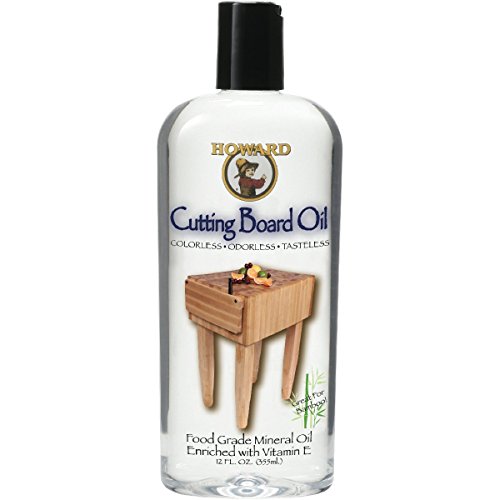
Best for: Home chefs seeking deep penetration to rejuvenate dry wood like cutting boards, butcher blocks, countertops, bowls, and utensils. The oil is tasteless and odorless, designed to remineralize without rancidity.
Why chosen: Howard’s formulation is designed to bring out natural wood color while protecting against cracking and drying, a solid all-around choice for frequent board oiling.
Limitations: Pure mineral oil may require more frequent reapplication on very dry or porous woods.
Thirteen Chefs Mineral Oil – 12 oz

Best for: Larger projects or ongoing maintenance in busy kitchens where a 12 oz bottle reduces restocking frequency. Suitable for boards, butcher blocks, knives, and wooden utensils.
Why chosen: This option mirrors the 8 oz version with the same NSF certification and American manufacturing, offering a higher volume for cost-conscious buyers.
Limitations: Some users may prefer scented oils or wax-infused formulas for additional surface protection; this is a pure mineral oil option.
NSF Certified Mineral Oil – Gallon

Best for: Larger-scale foodservice operations or households with high-volume board care needs, where a gallon supply reduces frequent repurchasing.
Why chosen: A colorless, odorless, tasteless oil that helps prevent absorption of odors and keeps stainless steel appliances looking new. Suitable for multiple surfaces, including cutting boards, bowls, and utensils.
Limitations: The large size requires more storage space and regular use to keep surfaces properly conditioned.
Buying Guide: Key Considerations When Choosing Food Grade Wood Oil
Safety and suitability: Look for USP grade or NSF-certified mineral oil when possible, ensuring the product is tasteless, odorless, and colorless. This minimizes flavor transfer and odors in food prep areas.
Penetration vs surface coating: Choose oils described as penetrating and non-greasy for frequent use on cutting boards and utensils. Oils that sit on the surface can create a film or sticky feel over time.
- Board type compatibility: Some oils work especially well on bamboo, teak, olive wood, or other hardwood boards. Consider your most-used boards when selecting.
- Size and storage: For small kitchens, 8–12 oz bottles are convenient. For high-use environments, a gallon can reduce refills.
- Aromas and additives: Some products include citrus scents or wax blends. If you want a neutral option, avoid scented formulas.
Frequently Asked Questions
- What is food-grade mineral oil used for? It nourishes and protects wooden cutting boards, butcher blocks, bowls, and utensils without adding flavor or odor.
- Is mineral oil safe for stainless steel? Yes, some products offer protection for blades and appliances while conditioning wood.
- How often should I oil my cutting boards? Re oiling frequency depends on use and climate, but many households oil every 1–4 weeks during active use or when wood looks dry.
- Can I mix oils with wax-based conditioners? Some products combine waxes for extra protection, but pairing pure mineral oil with a dedicated wax or conditioner is common for long-term care.
- Will mineral oil go rancid? Mineral oil itself does not go rancid, and colorless, odorless formulations reduce any off-odor concerns.
- Is NSF certification necessary? It adds assurance of food-safety testing, but many premium mineral oils meet USP standards and are widely used safely.