When selecting a food-grade teflon (PTFE) spray, the focus is on clean, non-toxic lubrication that minimizes residue and reduces friction in food-handling or food-processing environments. The top products below are chosen for durability, versatility, and compliance with food-contact guidelines. They suit bakery staff, meat processing teams, commercial kitchens, and maintenance technicians who need reliable, sprayable lubricants that won’t contaminate food surfaces. The table summarizes suitable picks and primary uses to help you compare at a glance.
Summary table of selected products
| Product | Best For | Key Benefit |
|---|---|---|
| DuPont Non-Stick Dry-Film Lubricant Aerosol | Industrial doors, hinges, and metal parts in food plants | 100% dry-film Teflon coating; long-lasting protection |
| WEICON PTFE-Spray | Metal, plastic, and wood surfaces requiring a grease-free dry film | Grease-free, high temperature resistance |
| Super Lube Dri-Film Lubricant | Dusty or dirty environments; electronics and conveyors | Non-conductive, dries on contact, won’t attract grit |
| Interflon Food Lube | General machine lubrication in food processing | MicPol dry film; water resistance and corrosion protection |
| Krowne Food Grade Silicone Spray | Refrigeration, drawers, and plastic components | Safe on plastic; lubricates without leaving oily residue |
DuPont Non-Stick Dry-Film Lubricant Aerosol, 10 oz

Best for metal-to-metal contact points in food environments where a clean, dry lubricant is essential. The unique 100% dry-film Teflon coating provides a clean, long-lasting coating that resists dirt and moisture. This product is suitable for sliding doors, hinges, guides, and other hardware that must function smoothly without sticky residues. It is especially useful where high-temperature exposure could occur and a non-oily film is preferred. Caution: avoid application on surfaces that require a tackier, adhesive hold or where wet-film lubrication is demanded.
WEICON PTFE-Spray | 13.5 oz

This grease-free dry lubricant uses PTFE to deliver a non-stick, low-friction coating that adheres to metal, plastic, and wood. It’s ideal for rails, hinges, and sliding components in food-processing equipment where oil-free lubrication is preferred. It also serves as a water-repellent coating for seals. Choose this if you need a durable dry-film solution that avoids residual oil and reduces cleaning needs. Limitation: not designed for heavy wet lubrication or environments that require a heavy oil presence.
CRC Food Grade Silicone Lubricant Spray, 10 oz (2-Pack)
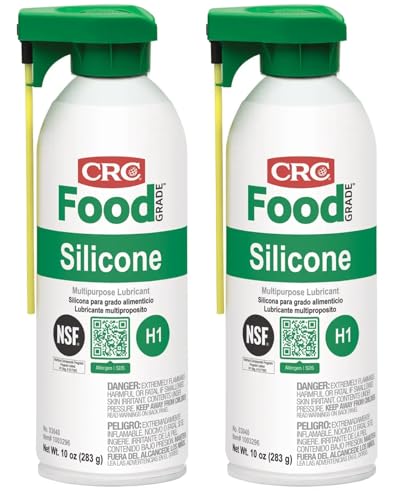
This NSF H1 certified silicone spray provides a non-staining, odorless film suitable for incidental food contact. It handles high-temperature conditions up to 400°F and is versatile for equipment, seals, and gaskets. Best used where a clear, inert coating is required to avoid surface marking. A potential limitation is that silicone films can sometimes attract dust or fibers in extremely dusty environments, so use where cleanliness is a priority and reapplication aligns with maintenance schedules.
Interflon Fin Grease – Industrial Food Grade Grease

Interflon Fin Grease is a food-grade, general-purpose grease with MicPol technology. It forms a tough film to reduce wear and lubricate under high loads, while offering water and dirt protection. This product is best for heavy-duty bearings, gears, hinges, shafts, and valves in industrial food environments. Consider this if you need a longer-lasting film for demanding machinery. Limitation: as a grease, it may attract more dust in very dry environments and may not be ideal for all low-friction needs where a spray is preferred for cleanliness.
Krowne 30-202 Food Grade Silicone Spray

Krowne’s food-grade silicone spray is appropriate for refrigerator doors, drawer slides, and food racks. It offers high viscosity lubrication and is safe on plastic while resisting chlorine. This makes it suitable for kitchen equipment and consumer appliances where a non-sticky silicone layer is desired. Best for synthetic surfaces and plastic parts, but avoid using on wood where silicone can be difficult to remove during cleaning cycles. Use caution with porous materials that may absorb the silicone over time.
Buying Guide: Key Considerations For Food-Grade PTFE Sprays
Intended use: Identify whether you need a dry-film PTFE spray, a silicone-based option, or a grease for high-load components. Dry films reduce dust attraction and provide clean operation, while greases excel under heavy motion and pressure.
Food safety certifications: Look for NSF H1 or equivalent certifications when incidental food contact is possible. This helps ensure compliance with food-processing standards.
Surface compatibility: Check compatibility with plastics, rubber, metals, and wood. Silicone sprays are often best for rubber seals; PTFE sprays work well on metals and many plastics.
Temperature range: Consider application temperatures. Some PTFE sprays tolerate high heat, while others are optimized for general purpose use.
Residue and cleanability: Dry-film coatings reduce residue and simplify cleaning, which is important in food environments. Non-staining formulas help prevent contamination or surface marking.
Caution and maintenance: Some products are best for one-time or periodic maintenance, while others are suitable for ongoing lubrication. Plan maintenance intervals accordingly and adhere to manufacturer guidelines.
FAQ
- What does NSF H1 mean for a food-grade spray? NSF H1 means the product is approved for incidental contact with food and is suitable for use in food processing and handling areas.
- Can I use these sprays on plastic parts? Some sprays are specifically labeled safe for plastic; others are best on metal. Always verify surface compatibility on the product page.
- Is a dry-film spray better than an oil-based spray? Dry-film sprays reduce dust attraction and are easier to clean, which is often desirable in food environments, but oil-based sprays may provide superior initial lubrication for certain moving parts.
- Will these sprays leave a visible residue? Dry films are designed to be clean and non-sticky; silicone-based coatings may leave a translucent film that remains clear on surfaces.
- How often should I reapply in a kitchen setting? Reapplication depends on usage, cleaning schedules, and environmental conditions. Follow the manufacturer’s guidance and observe surface performance during routine maintenance.
- Can I use these on electrical components? Some products are non-conductive and suitable for electronics, while others are not. Verify ratings and intended applications before use.