Salmon filleting demands a knife with balance, flexibility, and a razor edge. This guide showcases five top fillet knives designed for salmon and similar fish, highlighting blade material, grip comfort, and edge retention. Each option balances precision and control for clean, restaurant-quality fillets at home.
| Product | Brand | Key Feature | Blade Size |
|---|---|---|---|
| Cutluxe Fillet Knife – 7″ | Cutluxe | German high-carbon steel, full tang, ergonomic pakkawood handle | 7″ |
| SHAN ZU Fillet Knife 7″ | SHAN ZU | German 1.4116 stainless steel, ultra-thin precision blade | 7″ |
| HOSHANHO Fillet Knife 7″ | HOSHANHO | Japanese 10Cr15CoMoV steel, 15° edge, pakkawood handle | 7″ |
| KastKing Spartacus Fillet Knife | KastKing | Cerakote finish, 8Cr14 stainless steel, Kraton G handle | Various |
| Mercer Culinary M23860 Fillet Knife | Mercer Culinary | One-piece high-carbon Japanese steel, ergonomic handle | 8.5″ |
Chosen products emphasize thin, flexible blades that glide along bones, secure grips for precision, and durable edges to reduce waste. Use this table as a quick reference when comparing blade feel and handling for salmon filleting tasks.
Cutluxe Fillet Knife For Fish & Meat – 7″

The Cutluxe fillet knife is tapered to a razor-sharp edge, designed for effortless filleting, deboning, trimming, skinning, and butterflying various fish and meats. The blade edge is sharpened to 14-16 degrees per side, prioritizing precision slicing and edge retention. A luxury pakkawood handle provides a triple-riveted, stable grip for comfort and maneuverability in busy kitchens.
SHAN ZU Fillet Knife 7 Inch – Deboning and Filleting

SHAN ZU’s 7-inch fillet knife uses German 1.4116 stainless steel rated at 55-57 HRC for rust resistance and edge retention. The ultra-thin, double-edged blade supports precise cuts, while a triple-rivet ergonomic handle with a finger guard enhances balance and safety during filleting and boning tasks.
HOSHANHO Fillet Knife 7 Inch – Japanese Steel

HOSHANHO combines Japanese stainless steel (10Cr15CoMoV) with a 15-degree edge per side for sharpness and long-lasting performance. The 7-inch blade is designed for slicing, boning, skinning, and trimming, with a pakkawood handle that offers corrosion resistance and durability for repeated use in fish processing and kitchen prep.
KastKing Spartacus Fillet Knife – 8Cr14 Stainless
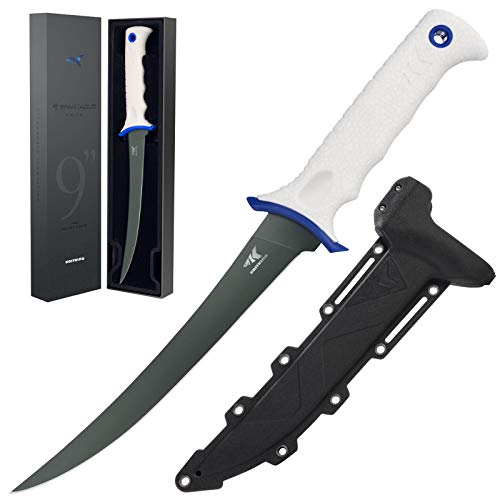
KastKing Spartacus fillet knives feature 8Cr14 stainless steel with a Cerakote ceramic finish for corrosion resistance. The Kraton G polymer handle provides a slip-resistant grip, and the knife line includes different lengths to match filleting and bone-separating needs, along with a protective sheath for safe storage.
Mercer Culinary M23860 Fillet Knife

Mercer Culinary M23860 pairs one-piece high-carbon Japanese steel with an ergonomic handle featuring textured finger points for a secure, non-slip grip. The 8.5-inch narrow blade excels at filleting meat and removing flesh while preserving bone structure for efficient processing in busy kitchens.
Buying Guide
Key purchase considerations when selecting a salmon fillet knife include blade flexibility, length, and edge geometry. A longer blade (6-9 inches) can more easily run along fish contours; however, too long a blade may hinder precise control in tight fillet work. Blade material matters: high-carbon stainless blades tend to hold an edge well and resist corrosion, while softer stainless can be easier to sharpen but may dull quicker in frequent use near saltwater.
- Blade orientation and edge angle: A 15-16 degree per side edge offers a balance of sharpness and durability for filleting delicate fish like salmon.
- Flexibility vs. rigidity: Flexible blades enable clean fillets along bones; stiffer blades are better for deboning and trimming tougher cuts.
- Handle design: Ergonomic, triple-riveted handles with a secure grip reduce fatigue and improve control during extended fillet sessions.
- Maintenance: Stainless or high-carbon stainless blades resist rust; consider knife care routines and hand washing to extend blade life.
- Safety features: Finger guards and full-tang construction enhance safety during delicate cutting tasks near bones and skin.
Compared to general kitchen knives, fillet knives for salmon emphasize thinness, balance, and edge retention. When choosing among the featured options, consider your typical filleting volume, preferred blade length, and whether you prioritize rust resistance, ergonomic grip, or added features like protective sheaths.
In sum, the five highlighted knives offer distinct advantages for salmon filleting—from the razor-sharp edges of Cutluxe and SHAN ZU to the Japanese-steel precision of HOSHANHO, the Cerakote durability of KastKing Spartacus, and the ergonomic, one-piece blade of Mercer Culinary. Selecting the best option depends on your workflow, maintenance preferences, and budget considerations.