Answering the common question, these containers are designed to safely collect and store used cooking oil, grease, and bacon fat for disposal or recycling. They are best for home cooks who fry regularly, small-kitchen users needing odor control, and hobbyists seeking a tidy, reusable solution. The top picks below balance capacity, ease of use, and odor containment. A quick comparison table follows to help you decide at a glance.
| Product | Capacity | Best For | |
|---|---|---|---|
| Oggi Stainless Steel Jumbo Grease Container | 1 Gallon / 4 Qt / 3.75 L | Frequent fryer users; needs large capacity | Removable strainer; snug lid |
| YULOFMVE Cooking Oil Solidifier | 14 oz jar; solidifies up to 40 cups (10 L) | Eco-conscious disposal; transport to facilities | Plant-based solidifier; environmentally friendly |
| Kyraton Bacon Grease Container | 1.4 L | Compact cleanup; simple storage | Stainless steel; easy grip |
| VEVOR Fryer Grease Bucket | 6 Gallons | High-volume kitchens; long storage | Carbon steel; locking clips; filter bag |
| Fat Trapper System (Range Kleen) | 12 disposable bags; 4.5″ x 3.75″ x 8.5″ | Simple, odor-control disposal | Designed for bag storage with bags included |
Oggi Stainless Steel Jumbo Grease Container
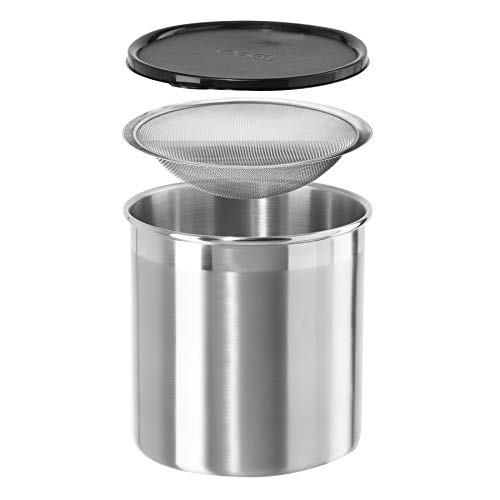
Best for high-volume fryers, the Oggi container offers a large capacity and practical strainers. It holds up to 1 gallon and includes a removable strainer for easy reuse of oil. The clamp-on lid helps keep oils fresh and minimizes odors. Use this when you routinely drain and reuse fry oil and bacon drippings, and you want a durable, easy-to-clean option.
Best for: Home chefs who fry often and want a straightforward, wide-mouth container with a built-in strainer. Limitation: larger footprint may take more counter space.
YULOFMVE Cooking Oil Solidifier

Best for eco-conscious disposal and roommates or small households that want a mess-free solution. This solidifier powder can solidify up to 40 cups of oil, allowing safe transport and disposal without leaks. It’s plant-based and designed to break down in about 30 days, offering a practical route to recycling facilities. The included scoop supports precise portioning.
Best for: Users seeking a compact, spill-free way to solidify used oil before disposal. Limitation: requires a container to hold the solidified material and some storage space for the jar.
Kyraton Bacon Grease Container With Strainer

Best for compact storage and quick filtering. This 1.4-liter stainless steel container includes a built-in strainer and lid with an easy-grip handle. It’s well suited for households that want a sturdy, rust-resistant option to capture grease and cooking oils while keeping odors contained. Consider this if you prefer a smaller, portable unit for under-sink storage.
Best for: Small kitchens needing a durable, space-saving grease keeper. Caution: capacity is smaller than larger-capacity models, so you may need more frequent emptying.
VEVOR Fryer Grease Bucket

The VEVOR grease bucket is designed for heavy use with a large 6-gallon capacity. It features a rust-resistant carbon steel shell, lid with four quick-locking clips, and a high-temperature seal to prevent leaks. A filter bag is included to keep oil cleaner for longer, making it a strong choice for serious home cooks or small commercial setups. Best for: kitchens that need to store substantial amounts of used oil and keep it sealed between uses.
Caution: heavier unit may be harder to move for some users; ensure proper ventilation when handling hot oil.
Fat Trapper System/Grease Storage

This Range Kleen system focuses on bag-based disposal with twelve disposable grease bags included. It catches and stores grease before disposal, helping reduce odors and mess. The container measures 4.5″ x 3.75″ x 8.5″, with each bag sized at 4″ x 3″ x 6.75″ holding up to 22 oz. It’s a practical option for counter or under-sink storage and fast bag-changing. Best for: users who prefer a bag-in-container approach and minimal cleaning effort. Limitation: bag replacements are required, adding ongoing consumable costs.
Buying Guide
What capacity should you choose?
Consider your frying frequency and kitchen space. Large capacities (like 6 gallons) suit regular fryers or small home businesses, while compact 1–2 liter containers work for occasional home cooks.
Do you need a built-in strainer or bag system?
Strainers help recover reusable oil and reduce solids, while bag-based systems simplify disposal and odor control. Choose based on your preferred disposal workflow and storage space.
What about odor control and cleanup?
Look for snug lids, odor-sealing designs, and rust-resistant materials. Easy-clean surfaces and dishwasher-safe parts make maintenance simpler.
Material matters
Stainless steel offers durability and odor resistance. Carbon steel can be tougher but may require coating to prevent rust. Plastics are lighter but may scratch or stain.
Compatibility with disposal methods
Solidifier powders are useful for transport to facilities or recycling sites. Bag systems and containers are better for immediate disposal and long-term storage within the kitchen.
FAQ
- What is the best oil disposal container for a small kitchen?
Best for small spaces is Kyraton Bacon Grease Container or a compact bag-based system like Fat Trapper, which minimizes counter footprint. - Can I reuse oil collected in these containers?
Yes, if the container includes a strainer and the oil remains clean enough for reuse. Follow safe cooking guidelines. - Do solidifier powders work with all oils?
They work with most fats and cooking oils, but follow product directions for best results. - Is a 6-gallon grease bucket necessary for home use?
It’s ideal for frequent fryers or households that discard oil often; smaller households can opt for 1–2 gallon options. - Are these containers leak-proof?
Look for locking lids, gaskets, and tight clamps to minimize leaks during storage and transport. - Do these products meet environmental disposal guidelines?
Some products offer eco-friendly disposal options or solidification methods; check local regulations for grease recycling.