When you want a rich, even black finish without drips, gel wood stains are a top choice. This guide highlights the best black gel stains for indoor projects, with clear notes on who each product suits best, and practical cautions. Ideal buyers include DIYers finishing furniture, doors, trim, and accents; homeowners refinishing cabinets; and hobbyists seeking low-odor options for indoor use. The table below compares five top picks to help you decide quickly.
| Product | Best For | Why It Stands Out | Limitations |
|---|---|---|---|
| Varathane Total Control Gel Stain Ebony (Quart) | Indoor furniture, doors, trim | Thick, no-drip formula; low odor; fast dry time | Only quart size listed here |
| Minwax Gel Stain for Interior Wood Surfaces, Black (Quart) | Vertical surfaces; cabinets | Excellent color control; non-drip; smooth vertical application | Requires conditioner for uniform color on bare wood |
| Varathane Premium Gel Stain, Black (Quart) | Doors, window trim, fiberglass doors | Vertical-surface friendly; thicker consistency; good coverage | Oil-based vibe may require ventilation |
| Varathane Total Control Gel Stain Half Pint Ebony | Small projects, touch-ups | Same gel benefits in a smaller package; convenient for refinishing accents | Smaller quantity may require multiple coats for large projects |
| Furniture Clinic Wood Stain, Black (8.5oz/250ml) | Indoor & outdoor furniture; versatile surfaces | Low odor and non-toxic; wide color range with good penetration | One-coat color may vary on open-grain woods |
Varathane Total Control Gel Stain Ebony — Quart

Product highlights include a THICK, NO-DRIP FORMULA that reduces mess on both horizontal and vertical surfaces, including wood, metal, and fiberglass. It’s a LOW ODOR, WATER-BASED GEL STAIN, making indoor projects more comfortable, and a FAST DRY TIME with a wood-drying window of about 1 hour. Best for furniture, doors, trim, and banisters where controlled color is key. Best for buyers seeking a modern, low-odor alternative to solvent-based stains. Caution: Water-based gels still require good surface prep and proper ventilation for occupied spaces.
Who it’s best for: DIYers refinishing furniture, interior doors, or trim who want minimal mess and quick results. Choose this if you prioritize indoor usability and easy cleanup.
Minwax Gel Stain for Interior Wood Surfaces, Black — Quart

Designed to give full control during staining, this gel stain is positioned for woodwork, furniture, doors, molding, trim, cabinets, and accessories. Its UNIQUE NON-DRIP FORMULA helps with easier application on vertical surfaces, and the product DELIVERS EVEN COLOR across wood and non-wood surfaces like metal, veneer, and fiberglass. A pre-treatment with Minwax Pre-Stain or conditioner helps ensure uniform color. Caution: Expect consistent results with proper surface preparation; bare wood often benefits from conditioner.
Who it’s best for: Users who want predictable color along with strong vertical-surface performance and easy cleanup. Choose this if you value even color distribution and compatibility with multiple substrates.
Varathane Premium Gel Stain, Black — Quart
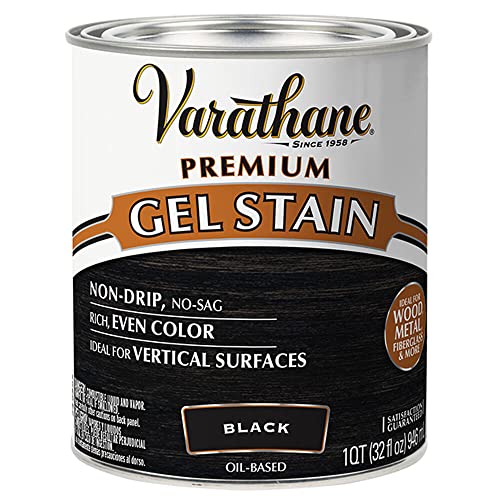
This premium gel stain is designed for vertical surfaces such as doors, window trim, and furniture. It features a thicker consistency to prevent drips and runs, providing twice the coverage of traditional oil-based stains. Dries to the touch in about 1 hour and covers up to 250 sq. ft. per quart; allow 2 hours between coats. Caution: Oil-based formulation may require adequate ventilation and solvent cleanup guidance.
Who it’s best for: Projects where a near-perfect, drip-free finish on vertical components is important. Choose this if you need strong coverage and predictable dry times on doors and trim.
Varathane Total Control Gel Stain Half Pint Ebony

This is the same gel-stain formulation in a half-pint size, ideal for small projects or touch-ups. It offers a THICK, NO-DRIP FORMULA, LOW ODOR, WATER-BASED GEL STAIN, and FAST DRY TIME, with a typical 1-hour dry window. Best for refinishing drawer faces, accent panels, or small furniture pieces where you want quick color refresh without a full can. Caution: The smaller volume may require more frequent reapplication for larger pieces.
Who it’s best for: Hobbyists or professionals working on small parts, sample boards, or finish touch-ups where precise color matching is needed without committing to a full quart.
Furniture Clinic Wood Stain, Black — 8.5oz

Furniture Clinic’s water-based stain is designed for effectiveness on all indoor and outdoor wood surfaces. It’s SAFE TO USE, low odor, and non-toxic, with a fast-drying profile and good color penetration. The line comes in 12 colors, including black, and is known for easy cleanup and strong coverage. Best for mixed indoor/outdoor projects where low odor and safety are priorities. Caution: One-coat opacity can vary on dense or open-grain woods; multiple coats may be needed for deeper black.
Who it’s best for: Builders and refinishing projects seeking a versatile, safe stain suitable for interior and exterior wood, with straightforward cleanup and a broad color palette.
Buying Guide: Black Gel Wood Stain Essentials
What to consider when choosing a black gel stain
Coverage, viscosity, and drying time matter. Gel stains are designed to stay on the surface longer, reducing runs on vertical surfaces. Look for low-odor, water-based formulas for indoor use, and richer blacks that deliver even color in one or two coats.
Surface compatibility and prep
Most gel stains work on wood, metal, fiberglass, and certain composites. Bare wood often benefits from a stain conditioner or conditioner-like prep to prevent blotching. For vertical surfaces like doors and trim, a non-drip formula can prevent drips and sagging.
Drying time and recoat windows
Most products dry to the touch in about an hour, but full cure and cross-coat compatibility can take longer. If rapid completion is important, prefer products that advertise quick dry times and recoat windows around 1–2 hours.
Ventilation and odor considerations
Water-based gels generally have lower odor than solvent-based stains and are safer for indoor projects. However, adequate ventilation is still advised, especially for small or poorly ventilated spaces.
Color consistency and coating layers
Gel stains tend to deliver consistent color but can vary by wood type. For uniform results on plywood, hardwood, or veneer, follow product directions and consider conditioners on bare wood. Multiple light coats can yield deeper black tones without over-saturation.
Application tips for best results
- Stir thoroughly to ensure even color throughout the can.
- Apply with a brush or lint-free cloth, working in the direction of the grain.
- Wipe with the grain to control depth of color and avoid overlap marks.
- Work in manageable sections, especially on large panels or doors.
Maintenance and finishing
After staining, consider a compatible topcoat (polyurethane, polycrylic, etc.) for protection. Allow adequate drying time between coats if applying a protective finish, and test color match on a scrap piece first when possible.
FAQ
- What is the difference between gel stain and traditional oil-based stain? Answer: Gel stains are thicker, less prone to dripping, and often water-based, which reduces odor and cleanup. They provide more surface color on the first coat and are easier to control on vertical surfaces.
- Can gel stains be used on metal or fiberglass? Answer: Yes, most gel stains can adhere to metal and fiberglass surfaces, but prep (scuffing, cleaning) improves adhesion and color uniformity.
- Do I need a conditioner for bare wood? Answer: For some brands, yes. A pre-stain conditioner helps prevent blotching on softwoods and achieves more even color.
- How many coats should I apply for a deep black finish? Answer: Typically 1–2 coats for darker results; follow product guidelines for recoat timing.
- Is a topcoat necessary after staining? Answer: Yes, for protection. Choose a compatible clear finish to seal the surface and extend durability.
- Are these products odor-friendly for indoor use? Answer: Many are low-odor or water-based, but ventilation is still recommended for enclosed spaces.