Answering the common buyer question, these biodegradable food waste bags are designed for countertop and small kitchen bins, helping you manage organic scraps with minimal mess. The top picks span different sizes—2.6 gal, 1.6 gal, and 3 gal—so you can match bags to your bin and composting workflow. Ideal buyers include apartment dwellers, busy households, and anyone seeking certified compostable liners that work in home or industrial facilities.
Summary of selected products:
| Product | Bin Type | Size / Capacity | Certifications |
|---|---|---|---|
| UNNI Compostable Trash Bags | Small kitchen bins | 2.6 gal / 9.84 L | BPI, CMA, OK compost HOME; ASTM D6400 |
| SUPERBIO 1.6 Gal Handle Tie Bags | Countertop bins | 1.6 gal / 6 L | BPI, OK compost INDUSTRIAL, TÜV SEEDLING; ASTM D6400 |
| ANECO 2.6 Gal Bonus Pack | Small countertop bins | 2.6 gal / ~9.84 L | OK compost HOME, BPI; 100% compostable |
| GreFusion 1.2 Gal Bags | Small countertop bins | 1.2 gal | BPI, ASTM D6400, OK Compost |
| ANECO 3 Gal Bags | Medium countertop bins | 3 gal | OK Compost HOME, BPI; ASTM D6400 |
UNNI Compostable Trash Bags for Small Bins
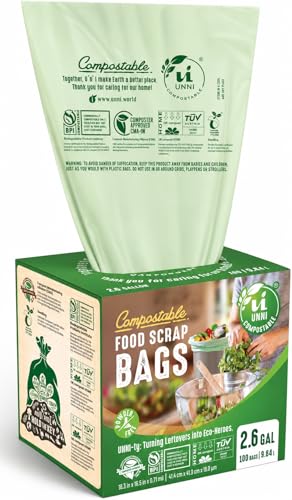
Best for: Small kitchen bins in homes with light to moderate daily waste. The 2.6 gallon size aligns with compact compost bins, and the 0.71 mil thickness helps resist tears from typical food scraps. Strongly suited for households prioritizing certified home compostability.
- Thick enough for daily use without frequent leaks.
- Certified compostable by BPI, CMA, and OK compost HOME.
Limitation: Not designed for heavy or very moist waste loads that exceed bag strength; consider upgrading to larger bags for heavy-duty use.
SUPERBIO 1.6 Gallon Handle Tie Bags

Best for: Small counter-top compost bins where a tie-handle feature helps secure waste during busy kitchen moments. The 1.6 gal size fits many desk-side or kitchen counters and offers industrial-grade certifications for reliability.
- Includes handle ties for easy closure.
- Certified by BPI and OK compost INDUSTRIAL; compatible with ASTM D6400.
Limitation: The labeling notes storage guidance; keep in a cool, dry place away from heat to maintain bag integrity over time.
ANECO 110-Count 2.6 Gal Compostable Bags

Best for: Homes seeking extra value with a 110-count pack that remains fully compostable and plastic-free, using corn starch and plant-based materials. Suitable for a primary kitchen trash bag in a small to medium bin.
- Includes 10 extra bags as a bonus.
- Compostable in home and industrial facilities; certified by OK Compost HOME and BPI.
Caution: Avoid exposure to high heat; store in a cool, dry place to maintain bag integrity over time.
GreFusion 1.2 Gallon Compostable Bags

Best for: People using very small countertop bins or bathrooms where discreet, small-capacity liners are ideal. The 1.2 gallon size covers quick food scraps, coffee grounds, and small waste streams.
- Certified by BPI, ASTM D6400, and OK Compost.
- Bottom seal and a size that fits compact bins; helps prevent leaks.
Limitation: Not designed for larger waste volumes; for bigger bins, choose larger-capacity bags.
ANECO 3 Gallon Compostable Bags

Best for: Medium-sized bins and households with higher waste output who want a tougher, thicker bag and consistent home/industrial compostability. The 3 gallon size provides more capacity between bag changes.
- 0.75 mil thickness offers strong tear resistance.
- Certified by OK Compost Home and BPI; compatible with ASTM D6400.
Limitation: Heavier loads may require bag changes every couple of days to maintain hygiene and prevent leaks.
Buying Guide: Key Considerations For Biodegradable Food Waste Bags
What size bag matches my bin?
Choose bags that fit your bin’s diameter and height. Common sizes include 1.2–3 gallons for countertop bins and 2.6–3 gallons for small kitchen compost bins.
What certifications matter?
Look for BPI, OK compost HOME or INDUSTRIAL, and ASTM D6400 compliance. These indicate the bag is certified to break down under recognized composting conditions.
Is thickness important?
Thicker bags (around 0.63–0.75 mil) offer better tear resistance for moist waste and heavy scraps, reducing leaks. Weaker bags may tear under weight or moisture.
Home vs. industrial compostability
Some bags are certified for home composting (OK compost HOME), while others require industrial facilities. If you compost at home, prioritize home-certified bags; otherwise, industrial-certified options still indicate compostability in many facilities.
Storage and shelf life
Store bags in a cool, dry place away from heat. Some brands note a shelf life around one year; heat can degrade packaging or liners over time.
Leak prevention and handling tips
Tie handles or reinforced bottoms help prevent leaks. Use a sturdy bin lid to minimize odors, and change bags regularly to maintain hygiene.
Eco considerations
All featured bags are designed to reduce plastic waste by using compostable materials, primarily plant-based polymers. Consider the full composting workflow—whether home composting or industrial facilities—when selecting a product.
FAQ
Are these bags suitable for home composting?
Yes, many are certified for home composting (OK compost HOME) or industrial composting, depending on the brand. Check the specific certification listed on each product.
What size bag should I use for a 2.6-gallon bin?
Look for bags labeled 2.6 gallons (or 9.84 liters) to ensure a snug fit and reduce leaks.
Do biodegradable bags break down quickly?
Breakdown times vary by facility and conditions. Home composting bins typically require bags certified for home composting, while industrial facilities handle other certified bags.
Can I mix these bags with a compostable mix in my compost pile?
Yes, these bags are designed to be composted with organic waste, but follow local guidelines for composting and bag disposal.
Are there bags with reinforced bottoms?
Some products feature reinforced bottoms or star-sealed designs to improve strength; check product features for bottom construction details.
Do all bags come with handles?
Many do, especially 1.6 gal or larger options, which helps with tying and disposal. If not, plan to tie the top securely.