Find compostable bags that meet ASTM D6400 standards and suit your space. This guide highlights five top picks for common roles—compact kitchen bins, tall cans, and general home composting. Each option is best for specific needs, from small counters to full-size waste stations, with notes on when to choose or avoid. The included buyer-friendly comparison helps you pick bags that break down in home or industrial facilities while keeping odors and leaks in check.
| Product | Best For | Key Benefit | Notes |
|---|---|---|---|
| UNNI Compostable Trash Bags, 2.6 Gallon | Small kitchen bins | 0.71 mil thickness for daily scraps | Certified by BPI, CMA, OK compost HOME; meets ASTM D6400 |
| UNNI Compostable Trash Bags, 13 Gallon | Tall kitchen cans | 0.9 mil reinforced for daily use | Certified; standard 13-gallon size; ASTM D6400 |
| BioBag 2.6 Gallon Food Scrap Bags | General kitchen counters | Fits most pails; USA-made | 0.64 mil; BPI; meets ASTM D6400 |
| TERRACOR 3 Gallon Compost Bags | Countertop bins and small offices | Plant-based blends; sturdy 3-gal size | BPI certified; ASTM D6400 |
| Simply Bio 13 Gallon Compostable Trash Bags | Large kitchen and office waste | 1 mil thick; leak-resistant drawstring | OK compost Home; BPI; ASTM D6400 |
UNNI Compostable Trash Bags, 2.6 Gallon
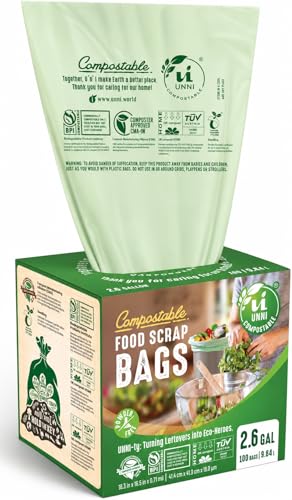
Best for small kitchen bins, these 2.6-gallon liners are 0.71 mil thick and sold as 100 bags per roll. They are designed to keep food scraps contained and bins clean. The bags are independently certified by BPI, CMA, and OK compost HOME, meeting ASTM D6400. Choose this if you want a compact option with proven compostability for daily scraps, such as fruit peels and coffee grounds. A potential limitation is the thinner profile compared with larger, heavier-duty bags, which may wear with tougher waste.
- Size: 2.6 gallons (16.3 in x 16.5 in)
- Thickness: 0.71 mil
- Count: 100 per roll
- Certifications: BPI, CMA, OK compost HOME; ASTM D6400
UNNI Compostable Trash Bags, 13 Gallon

Best for tall kitchen cans, this 13-gallon option is 0.9 mil thick and features reinforced construction for heavier daily scraps. It arrives in rolls of 50 and carries independent compostability certifications, including ASTM D6400 compliance. Opt this bag when you need a sturdier liner for taller, higher-usage bins. A limitation is the larger size, which may not fit smaller can openings without adjustment.
- Size: 13 gallons (23.75 in x 31.49 in)
- Thickness: 0.9 mil
- Count: 50 per roll
- Certifications: BPI, CMA, OK compost HOME; ASTM D6400
BioBag 2.6 Gallon Food Scrap Bags

Best for general kitchen counter use, BioBag 2.6-gallon liners are 0.64 mil thick and USA-manufactured with imported resin from Italy. They fit most compost pails and promote home composting. The bags are certified to meet ASTM D6400 standards. Choose this option for a budget-friendly, readily available bag that supports backyard composting. A drawback is that the thickness is lighter than some competitors, which may affect durability with dense waste.
- Size: 2.6 gallons (16 x 17 in)
- Thickness: 0.64 mil
- Certifications: BPI; ASTM D6400
TERRACOR 3 Gallon Compost Bags

Best for countertop bins in small kitchens or offices, TERRACOR offers a 3-gallon size with plant-based materials. The bags are BPI certified and meet ASTM D6400. This choice is suitable when you want more capacity than a 2.6-gallon bag without moving to a large bin. A limitation is that the 3-gallon size may not fit all standard pails if dome lids restrict clearance.
- Size: 3 gallons (16.9 in x 17.7 in)
- Composition: Plant-based PLA/PBAT blend
- Certifications: BPI; ASTM D6400
Simply Bio 13 Gallon Compostable Bags

Best for large kitchen waste and office use, Simply Bio 13-gallon liners are 1 mil thick with drawstrings for easy closure. They are certified to OK Compost Home, plus BPI and ASTM D6400 standards. Choose if you need robust leak resistance and simple tie-downs in high-volume spaces. A potential limitation is the higher thickness which may be overkill for light daily scraps.
- Size: 13 gallons (Width 23.7 in x Height 29.4 in)
- Thickness: 1.0 mil
- Certifications: BPI, OK compost HOME, ASTM D6400
Buying Guide: Key Considerations For ASTM D6400 Compostable Bags
When selecting compostable bags, consider bin size, thickness, and where you intend to compost. ASTM D6400 compliance signals that the bag is designed to break down in industrial or home composting environments. Look for independent certifications (BPI, OK compost HOME, CMA) and ensure the bag size matches your bin. Thicker bags tend to be more durable for heavier waste, while thinner options reduce material use for lighter scraps. If sustainability is a priority, verify packaging is minimal and that resin sources support domestic or international composting standards.
Frequently Asked Questions
- What does ASTM D6400 certification mean?
Answer: It shows the bag is certified to break down in composting conditions compliant with that standard, typically in industrial facilities or home composting setups. - Are home-compostable bags the same as industrially compostable bags?
Answer: Not always. Some bags are certified for home composting (OK compost HOME) while others are intended for industrial facilities (BPI, EN 13432). Check the exact certification. - Which bag is best for a small kitchen bin?
Answer: A 2.6-gallon option with 0.7 mil thickness often balances fit and durability for daily scraps. - Can I use compostable bags for all kitchen waste?
Answer: Most waste types are suitable, but avoid bags with heavy grease or non-compostable materials that could hinder composting performance. - Do compostable bags affect compost quality?
Answer: When properly composted, the bags themselves typically break down and do not remain in the final compost, provided you use certified bags. - Are there any drawbacks to using compostable bags?
Answer: They can be more expensive and may be less durable against sharp, heavy waste compared to standard plastic bags.