Looking for a sturdy 20×15 cutting board that can handle big prep jobs, resist wear, and protect your knives? This guide highlights five top options that balance durability, surface quality, and practical features. Each product is suited for different cooks: from home meal preppers and entertainers to professional-style charcuterie setups. Read on to compare sizes, materials, and edge details to choose the best fit for your kitchen workflow.
Buying Guide Snapshot
| Product | Material | Best For | Key Feature | Potential Limitation |
|---|---|---|---|---|
| Allsum XL Cutting Board | Carbonized Bamboo | Heavy-duty prep, knife safety | 1″ thick, 3-layer construction | Requires regular oiling |
| OAKSWARE Cutting Boards | Acacia | Messy juices, carving, serving | Deep juice groove, reversible | Natural variance in color/pattern |
| John Boos R-Board Series | Maple | Classic, long-term use | Edge-grain, finger grips | Higher price point |
| FANICHI XL Acacia Board | Acacia | Multipurpose serving and prep | Juice groove, dual-sided | Care needed to maintain finish |
| thetchry Checkered Board | Acacia | Style + function | Checkerboard design with grooves | Hand-wash recommended |
Allsum XL Cutting Board for Kitchen
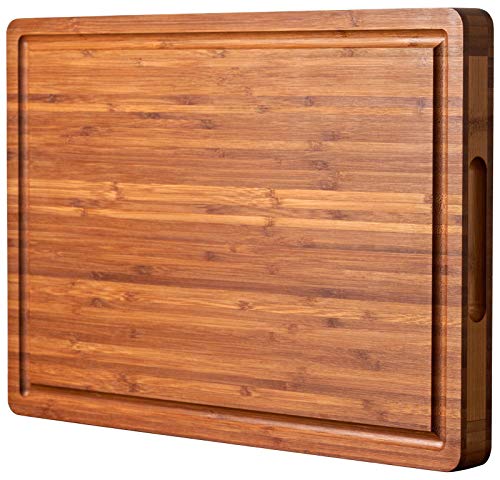
Material and thickness set this board apart for demanding tasks. Extra thick at 1″ provides a stable, resilient surface that resists warping and splinters. The 3-layer construction enhances durability, while carbonized bamboo reduces moisture absorption—helping the board stay flatter longer and be knife-friendly. The surface is finely polished and pre-oiled for a smooth, splinter-free feel. Best suited for home chefs who regularly dice hearty ingredients, block-cut meats, or prepare cheese platters. Caution: bamboo requires periodic oiling to maintain moisture resistance and prevent drying out.
OAKSWARE Cutting Boards, 20 x 15 Inch

This extra-large acacia cutting board focuses on durability and versatility. Edge grain construction is known for strength and self-healing properties, making it suitable for heavy chopping and long-term use. The board is reversible, offering a dedicated surface for raw or cooked foods and doubling as a stylish serving tray. Deep juice grooves help keep countertops clean, while built-in handles add portability. Best for cooks who value a sturdy work surface and a board that doubles as a charitable centerpiece for gatherings. Limitation: natural color variations can affect uniform appearance across sets.
John Boos R-Board Series 20”x15”

John Boos offers a classic, heavy-duty maple cutting board designed for longevity. Its 1.5-inch thickness (edge-grain) and reversible sides with recessed finger grips create a stable, high-end prep surface. This style is well-suited for serious home cooks who want a board that can withstand frequent knife work, heavy chopping, and serve-ready presentation. Caution: the larger size and heavier weight may require more storage space and lifting effort. Made in the USA options emphasize traditional craftsmanship.
FANICHI XL Acacia Wood Cutting Board

This acacia board emphasizes an impressive combination of size, utility, and aesthetics. With juice grooves along one edge and a back side with a long holder, it is designed for both chopping and serving duties. The inner handles and dark grain add a touch of elegance, making it a versatile centerpiece for kitchens and gatherings. Best for entertainers or family cooks who balance prep and presentation. A caution: as with most natural wood boards, regular conditioning helps preserve the finish and prevent cracking over time.
thetchry Cutting Boards for Kitchen

Designed with a stylish checkered pattern, this acacia board brings a bright aesthetic to the kitchen. It features a front juice groove to catch liquids and built-in grooved side handles for easy transport. The back side can double as a serving or kneading board, making it a flexible option for cooks who sometimes pivot between prep and presentation. Better for those who appreciate design as part of daily cooking. Limitation: recommended hand washing to prolong life and preserve the finish.
Buying Guide: Key Considerations
Material matters most when selecting a 20×15 board. Acacia and bamboo offer durability, knife-friendliness, and natural beauty, while maple provides a traditional, rigid surface ideal for long-term use. Consider thickness: thicker boards resist warping and heavy chopping but require more storage space. Reversibility and juice grooves help manage mess, but grooves need cleaning to prevent residue buildup. Handles improve portability for moving between prep zones or to the table. If you entertain often, choose a board with an attractive grain and serving surface; for practical daily use, durability and stability take priority.
How to care for a wooden cutting board: hand wash with mild soap and warm water, dry immediately, and oil periodically with food-safe mineral oil or beeswax-based conditioner. Avoid soaking or placing in a dishwasher, which can warp wood and degrade finishes. If you notice cracks or splinters, sand lightly and recondition. Always use a suitable board for raw meat or vegetables to reduce cross-contamination risk, and consider color-coding or dedicated boards for different food groups.
Frequently Asked Questions
- What makes a 20×15 board a good all-purpose size? It provides ample cutting space for large roasts, cheeses, fruits, and bread while staying manageable on most countertops.
- Are bamboo boards as durable as hardwood boards? Yes, bamboo is dense and knife-friendly, with moisture resistance advantages when properly oiled.
- Should I choose a board with juice grooves? If you chop juicy items, grooves help keep counters clean; cleaning grooves requires regular maintenance.
- Is a reversible board better? Reversibility doubles surface life and offers separate surfaces for raw vs. cooked foods, improving hygiene.
- Which board is best for gift options? A stylish acacia or checkered design with a serving function can serve as an attractive, versatile gift for home cooks.
- Do these boards require special care? Yes, standard oiling, hand washing, and avoiding dishwasher use help maintain longevity and surface quality.