Answering the common buyer question: which rolling pin helps you achieve uniform dough thickness with ease? These five adjustable rolling pins are ideal for home bakers and aspiring pastry chefs who want precise control, durability, and simple cleanup. The top picks vary from stainless steel designs with removable rings to traditional wooden pins with clearly marked measurements. This guide explains who each product is best for and why, plus a practical buying guide to help you choose.
Summary of selected products:
- AOAONIU Rolling Pin with Adjustable Thickness Rings — Best for beginners who want precise control and easy cleanup.
- PEASUG Adjustable Rolling Pin — Best for long rolling sessions and hygienic stainless steel design.
- Mepple Rolling Pin with Thickness Rings — Best for all-around versatility and wooden grip.
- GoodCook Classic Wooden Rolling Pin — Best for traditional feel and simple operation.
- GOBAM Wood Rolling Pin — Best for multi-use wooden rolling and fondant work.
AOAONIU Adjustable Rolling Pin With Rings

Best for: novice bakers and busy home cooks who want quick, consistent dough thickness. Why selected: this 17-inch stainless steel pin includes four removable rings (1/16, 1/8, 1/4, 3/8 inch) that enable precise thickness control across a range of doughs, from cookies to fondant. The 430 stainless steel resists rust and heat, and the non-stick surface helps dough release. Clean-up is simple with a damp cloth or direct washing. Caution: while durable, stainless steel may feel heavier than wooden pins for extended rolling sessions.
- Materials: 430 stainless steel with non-stick surface
- Thickness options: 1/16″, 1/8″, 1/4″, 3/8″
- Length: 17 inches
PEASUG 17-Inch Adjustable Rolling Pin

Best for: bakers who want long rolling spans with crisp measurement markings and easy cleaning. Why selected: four rings (2mm, 3mm, 6mm, 10mm) provide precise dough thickness control for pancakes, bread, pies, noodles, and cookies. The 17-inch stainless steel design is corrosion-resistant and easy to clean—hand wash or dishwasher-safe. Caution: stainless build can feel slippery if used with very floury dough, so keep the surface lightly floured.
- Thickness rings: 1/16″, 1/8″, 1/4″, 3/8″ (2mm, 3mm, 6mm, 10mm)
- Material: premium stainless steel, seamless design
- Length: 17 inches
Mepple Rolling Pin With Rings

Best for: serious home bakers who favor a traditional wooden feel with modern thickness control. Why selected: 17 inches long with four rings (2mm, 4mm, 6mm, 10mm) allows precise thickness for pizza crusts, pies, cookies, and pastry. The beech wood construction offers a smooth roll and clear inch/centimeter markings. Caution: wood can absorb odors; avoid soaking and ensure thorough drying after cleaning.
- Material: beech wood
- Rings: 1/16″ (2mm), 1/6″ (4mm), 1/4″ (6mm), 3/8″ (10mm)
- Length: 17 inches
GoodCook Classic Wooden Rolling Pin

Best for: buyers wanting a straightforward, durable wooden rolling pin with reliable bearings. Why selected: one-piece barrel construction with nylon bearings ensures smooth rolling. Made in the United States, which may appeal to buyers seeking domestic manufacturing. Caution: lacks adjustable thickness rings; best for uniform dough when a standard thickness is acceptable.
- Construction: one-piece barrel with nylon bearings
- Material: genuine hardwood
- Origin: United States
GOBAM Wood Rolling Pin, Small
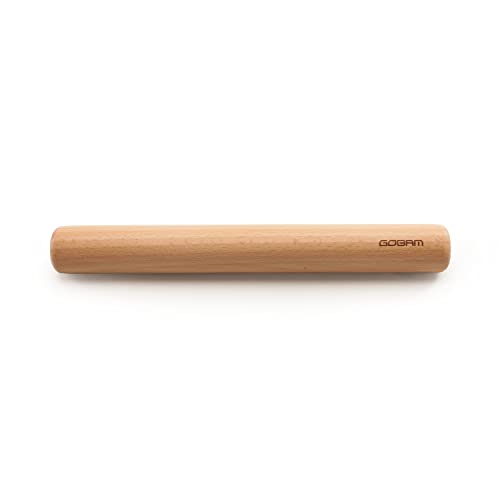
Best for: cooks and crafters who need a compact wooden roller for doughs, fondant, or pastry. Why selected: handcrafted beech wood with a smooth finish; compact 11 x 1.38 inches size is versatile for small batches and fondant work. Caution: smaller size may not be ideal for large doughs or pizza crusts.
- Size: 11 x 1.38 inches
- Material: beech wood
- Use: doughs, fondant, pizza, pastry
Buying Guide
What to consider when choosing an adjustable rolling pin
- Material and durability: Stainless steel offers rust resistance and easy cleaning, while wood provides a traditional feel and grip. Consider whether you prefer a seamless design for easier cleanup.
- Thickness control: Rings or stacks of rings should present clear measurements. Decide how precise you need thickness control for your recipes.
- Length: Longer pins cover more dough in a single pass, helpful for pizzas and pies; shorter pins are easier to maneuver for small batches.
- Maintenance: Stainless steel pins are dishwasher-safe in some cases but require drying; wooden pins should be dried promptly to avoid warping or odor absorption.
- Ease of cleaning: Non-stick surfaces and minimal crevices simplify washing and reduce dough residue.
- Comfort and grip: Wooden pins with ergonomic handles can reduce hand fatigue; metal pins may be heavier but offer a solid rolling feel.
FAQ
- What is the main benefit of thickness rings?
They ensure dough thickness consistency across all parts of the dough, improving bake evenness. - Are stainless steel rolling pins easier to maintain than wooden ones?
Yes, they resist staining and can be cleaned more easily, but some users prefer wooden texture for grip. - Should I choose a long or short rolling pin?
Long pins cover more area and speed up rolling for large doughs; short pins offer better control for small or delicate doughs. - Can these pins be used for fondant?
Yes, several models are designed for fondant and pastry work with smooth surfaces for clean sheets. - Are adjustable pins suitable for beginners?
Yes, adjustable rings simplify achieving uniform thickness, which is especially helpful for beginners learning dough control. - Is cleaning a concern with wooden pins?
Wooden pins should be dried after washing to prevent warping and odor buildup.