Best Picks & Buying Guides · Research-based comparison
Best Narrow Pouring Kettles for Small Coffee Stations
This article contains Amazon affiliate links. Best Products House may earn a commission from qualifying purchases. Read our disclosure.
In this guide Jump to a section
- Three routes to the same coffee corner
- Start with the entire coffee station
- Hario Buono 1L: a direct stovetop option
- Fellow Stagg stovetop: a visible thermometer
- COSORI CO108-NK: preset electric heating
- Compare the heating decision before the handle
- Use a small-station fit rehearsal
- When none of the three is the right answer
- Check the exact package before ordering
For a small coffee station, shortlist a narrow-spout kettle around the way you heat water: the Hario Buono 1L for a simple stovetop route, Fellow Stagg stovetop for an integrated thermometer, or COSORI CO108-NK for preset electric heating. The practical choice depends on your usable space and preferred routine.
This is a documentation-based comparison, not a hands-on pouring or temperature test. The three options have different heating arrangements, so the recommendations describe which documented design suits a particular setup rather than a measured winner.
Three routes to the same coffee corner
| Exact candidate | Heating arrangement | Reason to shortlist |
|---|---|---|
| Hario Buono 1L VKBR-100-HSV | Stovetop; 600 mL practical capacity | Simple separate heating routine |
| Fellow Stagg stovetop | Stovetop; integrated thermometer | Temperature information on the vessel |
| COSORI CO108-NK | Electric base; 0.8 L; presets | Supported preset-and-hold routine |
Start with the entire coffee station
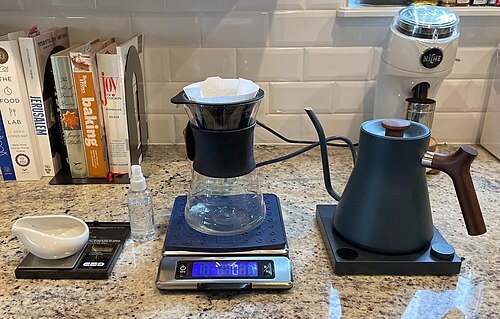
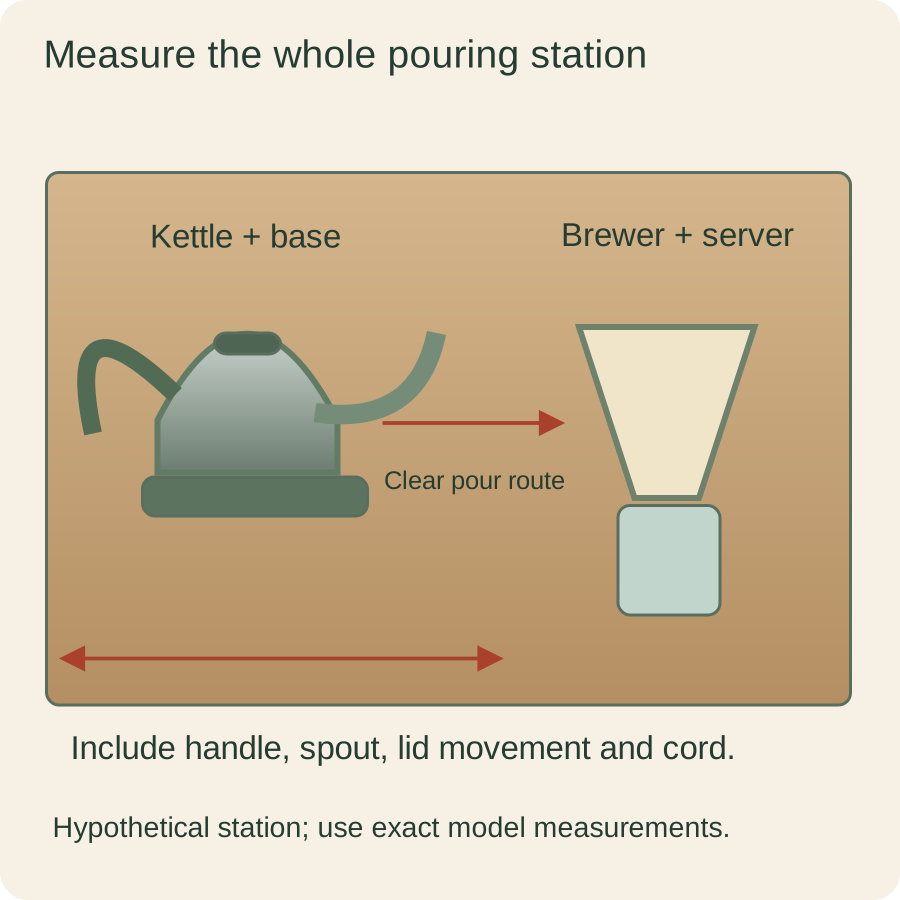
Measure the space used by the kettle with its handle and spout, the brewer, a cup or server, and your scale if you use one. A small body can still need a surprisingly long horizontal space once the spout and handle are included.
Separate the kettle’s parked location from its operating location. A stovetop kettle may return to the coffee corner after heating, while an electric model needs its base positioned and powered according to its manual.
Include the permitted filling, lid removal, and pouring movements in your plan. The useful station lets you handle the kettle without reaching over a brewer or moving a hot vessel around an unrelated appliance.
Check the actual water amount you need for your brewing method. Do not count a product’s headline liters as a promise that you should fill it to the brim or that the full advertised volume is its practical brewing capacity.
Hario Buono 1L: a direct stovetop option
The Hario Buono 1L is the simple candidate when you want a slim spout and a separate stovetop heating routine. Hario’s US page identifies the current silver version as VKBR-100-HSV and lists its overall dimensions as 295 by 144 by 130 millimeters.
Those dimensions include more than the rounded body, so use the full outline when checking your coffee corner. A kettle can be relatively low and still occupy a meaningful length along the counter.
Hario distinguishes the 1L product name from its 600-milliliter practical capacity. That distinction matters if your water plan includes rinsing a filter as well as brewing, because the title alone does not describe the amount you should plan to heat.
Choose this option if you prefer a relatively straightforward vessel and can follow its supported stovetop use. Do not choose it expecting preset electric temperature control or an integrated display; those are different features from a narrow pouring spout.

The limitation is the separate heating and temperature-checking routine you need to plan for your recipe. If you want the kettle to manage a chosen preset itself, compare the electric option rather than treating a familiar shape as the same kind of appliance.
Fellow Stagg stovetop: a visible thermometer
Fellow’s Stagg Pour-Over Kettle adds a built-in brew-range thermometer and a counterbalanced handle to its documented stovetop design. Its manufacturer page lists a 1.0-liter capacity and a narrow precision pouring spout.
The relevant benefit is that temperature information is integrated into this vessel rather than supplied by a separate loose accessory. That is a design distinction, not evidence that the thermometer is more accurate than another tool you already own.
Choose the Stagg stovetop if you like the idea of reading its built-in thermometer while managing heating yourself. Confirm the instructions for your cooking surface and the exact variant instead of assuming compatibility from the stainless-steel appearance.
Keep this stovetop model separate from Fellow’s electric Stagg EKG family when shopping. Similar brand and spout language do not mean the package includes a powered base, temperature selection, or the controls shown on an electric listing.

The tradeoff is that a thermometer does not turn a stovetop kettle into an automatic temperature-holding appliance. You still need a supported heating setup and the attention required by its instructions and your brewing method.
COSORI CO108-NK: preset electric heating
The COSORI Original Electric Gooseneck Kettle CO108-NK is the electric candidate for a station where you want presets on a separate power base. COSORI documents a 0.8-liter capacity, US 120-volt operation, and five temperature presets for this model.
The maker also documents a hold-temperature function lasting up to 60 minutes through its specified operating method. That can suit a routine built around the available presets, without establishing independent test results for temperature accuracy or recovery.
Choose this model if those preset choices match the drinks you make and your station can accommodate the base and cord according to the manual. Include the whole assembly in your measurements rather than comparing its kettle body with a stovetop model’s entire footprint.
Do not assume that presets provide every temperature you might want. If your routine depends on selecting arbitrary temperatures or a function not listed for this model, keep that requirement visible and compare a different documented product.


The capacity is also different from a large general-purpose kettle. Plan your actual batch using its permitted fill levels, especially if you expect to make several drinks and use additional water for preparation.
Compare the heating decision before the handle
The largest difference here is where and how the water is heated. The Hario and Stagg stovetop options keep that task at a supported cooking surface, while the COSORI creates a powered station with its own controls.
Think about the walk between your sink, heating position, and brewer. A tidy corner does not automatically make a routine convenient if you must carry hot water through a crowded route every time you make coffee.
For an electric setup, check the supply and placement requirements before treating the nearest outlet as suitable. For a stovetop setup, check the kettle and cooktop instructions together rather than relying on a broad material label.
None of these documentation checks predicts your preferred pouring feel. If grip comfort or balance is the deciding factor, seek an appropriate opportunity to handle the exact model or read the seller’s return conditions before ordering.
Use a small-station fit rehearsal
Make a paper outline from each candidate’s confirmed overall measurements where those are available. Place it beside the brewer and mark the position of the spout, handle, lid movement, and any powered base.
Hold a cool existing vessel to rehearse your reach to the brewer without pretending it reproduces a candidate’s balance. You are checking the route and available room, which are things your kitchen can answer before you buy.
If an important measurement is missing, ask the manufacturer for it. Do not infer a safe clearance or an exact base size from a product photograph, and do not use a shipping-box dimension as an appliance footprint.
Keep the parking position practical after serving too. A hot kettle needs the suitable resting surface and handling method its instructions require, even if you would prefer to slide it immediately into a narrow cabinet.
When none of the three is the right answer
Keep looking if your usual water quantity exceeds a candidate’s supported working amount or the full outline crowds the preparation area. A narrow spout does not compensate for an appliance that cannot support your actual brewing routine.
Choose another category if you mainly want to fill large pots or serve a crowd and do not need the controlled pour of this shortlist. Your everyday job can be better served by a documented product with a different capacity or spout arrangement.
You can also keep a suitable kettle you already own while you clarify what would improve the coffee station. A specific unmet need is a better buying reason than replacing a working tool simply because a new corner looks unfinished.
Check the exact package before ordering
Compare the model, color, working capacity information, and intended US electrical version with the linked listing. Pay particular attention to imported electric kettles, because a similar exterior does not establish US voltage compatibility.
Use the current manufacturer manual for first use and care after the actual kettle arrives. Product availability and prices can change, so the purchase links let you check the exact listing without turning today’s comparison into an unsupported price promise.
Your final choice should give you a complete, comfortable heating-and-pouring routine. The small station works when the kettle’s documented design fits the water amount, movement, and controls you genuinely want to use.
Sources & research notes
Documentation checked October 23, 2026. Practical examples are original planning exercises; product recommendations compare documented features.