Answering the question “which non-stick pressing sheet is best for my project,” this guide highlights top options for heat pressing, appliqué, and fabric crafts. Each product is suited for a different crafter—quilters, iron-on transfer work, and DIY enthusiasts who want clean, reusable surfaces. Below, you’ll find a quick buying table, followed by detailed sections to compare performance, suitability, and practical usage notes.
| Product | Best For | Key Benefit |
|---|---|---|
| YRYM HT 3 Pack PTFE Sheet | Heavy heat pressing, multi-project work | High heat resistance, reusable, tear resistant |
| Dritz Non-Stick Pressing Cloth | Clothing care, portable pressing | See-through design, protects fabrics |
| Acellegic Applique Fusing Mat | Applique and fusible web projects | No-slip silicone mat with PTFE sheet |
| Bear Thread Applique Pressing Sheet | Quilting and fusible appliqué | Non-stick, reusable, durable |
| Selizo 4 Pack Teflon Sheets | Versatile heat pressing on multiple projects | Four sizes, up to 600°F, reusable |
YRYM HT 3 Pack PTFE Sheet for Heat Press

The YRYM HT pack provides three PTFE sheets designed for heat pressing up to 600 degrees. These sheets are reusable and tear resistant, making them ideal for craft projects that involve wax, glue, or clay. They protect the work surface and reduce sticking during transfers. Best for: hobbyists who run multiple projects in a single session and need durable, easy-to-clean sheets. Caution: thick materials or textured surfaces may require careful placement to avoid edge curling during high-heat applications.
Dritz Non-Stick Pressing Cloth

The Dritz pressing cloth is a lightweight, transparent option that lets you see fabric details while pressing. It’s portable and suitable for travel, offering protection against rust and water deposits on fabrics. Best for: crafters who prioritize visibility during pressing and need a simple, portable solution. Caution: not as heavy-duty as PTFE sheets for high-temperature transfers; use for standard pressing tasks.
Acellegic Applique Fusing Mat with PTFE Sheet

This set includes a silicone applique fusing mat plus a PTFE ironing sheet. The mat is non-slip and non-stick, helping with precise tracing and easy placement of applique designs. It supports layered fabric crafts and provides a stable surface during pressing. Best for: quilters and fabric artists who layer elements and need a clear, tracking surface. Caution: silicone mats can take on heat over time; inspect for wear before heavy use.
Bear Thread Applique Pressing Sheet
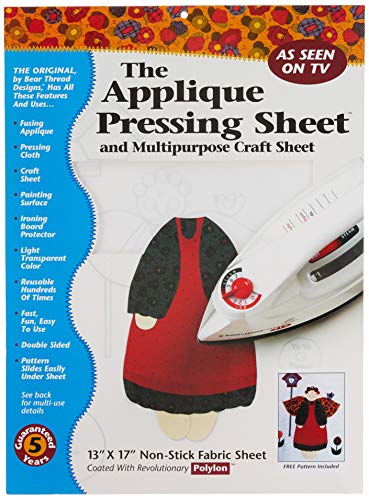
The Bear Thread pressing sheet focuses on non-stick, reusability, and alignment convenience. It’s ideal for fusible appliqué and quilting. Best for: quilters seeking a transparent surface to help with precise fabric placement. Caution: specifications on maximum temperature aren’t listed, so avoid temperatures beyond common pressing ranges for fusible web.
Selizo 4 Pack Teflon Sheets
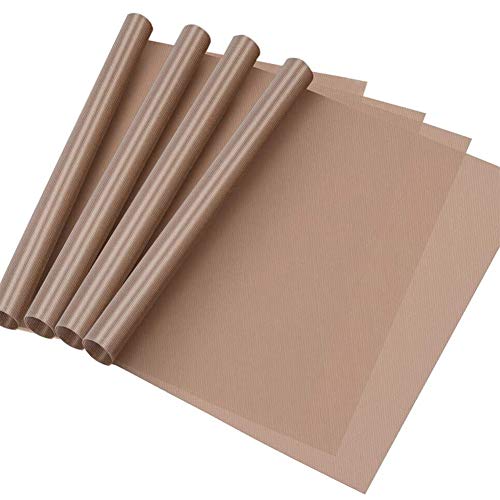
This Selizo pack includes four sheets in different sizes, offering high-temperature resistance up to 600°F and high reusability—up to 1000 uses. The glass-fiber construction provides durable, non-stick surfaces that resist adhesive buildup. Best for: versatile projects shifting between small and large transfers. Caution: ensure proper alignment to avoid shifting during press due to the non-slip surface.
Buying Guide
Key purchase considerations help you choose the right non-stick pressing sheet for your projects:
- Heat resistance: Look for sheets rated up to 500–600°F for common HTV and transfer tasks. Higher is safer for dense fabrics.
- Durability and reuse: Reusable PTFE sheets save money over time but check for tear resistance and edge durability.
- Size variety: A mix of sizes accommodates different projects, from small appliqués to large T-shirt transfers.
- Surface visibility: Clear or transparent sheets help with precise placement and alignment.
- Non-stick performance: Non-stick surfaces prevent adhesive buildup, reducing cleanup and iron cleanup time.
What to consider for different crafts
- Appliqué and quilting: Favor larger sheets or mats with non-slip surfaces for accurate placement and easy removal after pressing.
- Garment transfers: Choose sheets that are known to withstand repeated temperature exposure without sticking to vinyl or fusible webs.
- Travel or on-the-go projects: Lightweight, portable pressing cloths are ideal for field work without bulky mats.
Care and maintenance
- Wipe clean after use to avoid residue buildup.
- Avoid abrasive cleaners that can scratch or degrade non-stick surfaces.
- Allow sheets to cool before folding or stacking to prevent warping.
FAQ
- Q: Can non-stick pressing sheets be reused after cleaning? A: Yes, most PTFE sheets are designed for repeated use; follow cleaning instructions to preserve non-stick properties.
- Q: Are all sheets suitable for high-heat presses? A: Most are designed for 500–600°F; check the product details for exact limits.
- Q: Do these sheets protect ironing boards and irons? A: Yes, they help prevent adhesive transfer and residue, extending equipment life.
- Q: Is a transparent surface important for pressing? A: Yes, it aids precise placement of appliqués and transfer designs.
- Q: How many uses can I expect from a sheet? A: It varies by material and usage, but high-quality sheets often endure many cycles with proper care.