Answering the demand for sustainable, leakproof, and microwave-safe to-go packaging, this guide highlights five top eco friendly take out boxes. These options are ideal for caterers, food trucks, home meal delivery, and event planners who want compostable, tree-free containers that perform well with hot and cold foods. Each choice is paired with who benefits most, plus practical caveats to consider when selecting packaging for specific menus or services.
| Product | Material | Pack Size | Best For |
|---|---|---|---|
| ECOLipak 75 Pack Clamshell | Sugarcane (biodegradable) | 75 packs | Catering, large events, hot and cold foods |
| Aricsen 100 Pack Compostable 3-Compartment | Bagasse (bio-based) | 100 packs | Lunches, eateries needing compartments |
| Aricsen Compostable 50 Pack 9×6 | Bagasse | 50 packs | Small to mid-size takeout orders |
| Freshware Compostable Clamshell 8×8 | Sugarcane + Bamboo blend | 50-pack | Restaurants, events, PFAS-free option |
| Lucklot 100 Pack 8×9 | Bagasse (PFAS-free) | 100 packs | High-volume takeout with three compartments |
ECOLipak 75 Pack Clamshell Take Out Boxes

Best for: caterers and event hosts needing large, double-locked, leak-resistant packaging for hot or cold foods. These 9×6 inch containers are made from sugarcane, a renewable resource, and are compostable after use. The double-lock closure helps prevent leaks during transport. They are microwave and refrigerator safe, oil and cut-resistant, making them a solid all-rounder for meals, sides, and desserts.
Why selected: 75-count packs offer value for higher-volume operations that want a tree-free alternative to foam or plastic. The material choice supports compostability in commercial facilities and aligns with sustainability goals.
Caution: Some facilities may require proper composting channels; check local guidelines to ensure compliant disposal after use.
Aricsen 100 Pack Compostable 3 Compartment Clamshell

Best for: kitchens needing portioned meals with moisture resistance and oil resistance. The three-compartment design helps separate items like entrees, sides, and sauces, while the compostable bagasse base reduces chemical exposure from plastics. Microwave-safe options add convenience for ready-to-serve meals.
Why selected: Strong, oil-resistant construction suits diverse menus, from barbecue to sandwich platters, with better sustainability than many plastics.
Caution: Three-compartment models may limit container size flexibility for large dishes; verify menu portioning aligns with container dimensions.
Aricsen 50 Pack 3 Compartment Clamshell
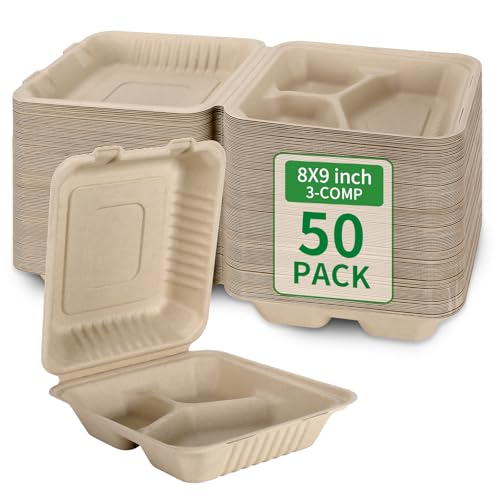
Best for: smaller menus or daily takeout operations where a compact, oil-resistant, compostable container is preferred. The 8×9 inch size with three compartments fits balanced meals and sides without sacrificing portability.
Why selected: Consistent performance with microwave safety and a focus on natural materials supports steady, eco-conscious service.
Caution: Availability can vary; consider stocking flexibility for peak periods to avoid stockouts.
Aricsen 100 Pack 9×6 Inch Clamshell

Best for: high-volume operations needing a versatile, microwavable container with robust compostable materials. The 9×6 inch footprint supports standard meal servings for lunch and dinner menus.
Why selected: Consistently strong, oil-resistant, and resistant to moisture while remaining compostable; aligns well with PFAS-free packaging standards.
Caution: Some users report variability in lid fit; ensure compatibility with your lids and stackability requirements.
Stack Man 100 Pack 8×8 Clamshell

Best for: restaurants and party catering that need a sturdy, sugarcane-based container with clear compostability claims. The 8×8 inch size is versatile for many meals and desserts.
Why selected: This option emphasizes 100% sugarcane fiber, offering a tree-free alternative with strong performance. The compostable claim helps meet environmental goals for events and daily service.
Caution: Ensure the product meets local composting standards for disposal efficiency in your area.
Lucklot 100 Pack 8×9 Inch, 3 Compartment

Best for: high-volume takeout with three compartments, suitable for meals with separate sides or sauces. Packaged in PFAS-free bagasse material, it supports eco-conscious service.
Why selected: Emphasizes compostable, family-friendly design with moisture and oil resistance, making it a practical option for varied menus and events.
Caution: Check for lid compatibility across batch sizes to avoid fitting issues during busy periods.
Buying Guide: Key Considerations When Choosing Eco Friendly Take Out Boxes
- Material and compostability: Prefer bagasse or sugarcane fiber for tree-free, PFAS-free options. Verify if containers are certified compostable in municipal or commercial facilities.
- Leak resistance and sealing: Look for double-locked or robust locking lids when serving saucy foods or hot meals to prevent leaks during transport.
- Meal compatibility: Choose 2- or 3-compartment designs if you need separation between entrees, sides, and sauces. Ensure sizes fit your most common menu items.
- Microwave and freezer safety: If you reheat packages in-store or deliver ready-to-eat meals, confirm microwave compatibility and freezer durability.
- Portion sizing and stackability: Ensure the container dimensions match your most popular portions and that the boxes stack securely for storage and transport.
- Custom branding options: Look for suppliers offering branded lids or packaging with your logo if brand visibility is important for your business.
- Disposal and local waste streams: Understand local composting capabilities; some facilities require specific types of compostable materials for approved processing.
Frequently Asked Questions
- Are compostable takeout boxes as sturdy as plastic? Yes, many plant-based containers offer comparable strength for typical hot and cold foods, with the added benefit of compostability when disposed properly.
- Can these containers be used in microwaves? Several listed options are microwave-safe; always verify the product’s packaging for specific heating guidelines.
- What does PFAS-free mean in these products? It means the container is free from per- and polyfluoroalkyl substances, reducing chemical concerns in contact with food.
- How long do these containers take to decompose? Under ideal composting conditions, many of these materials decompose in 3–6 months in commercial facilities. Local facilities may vary.
- Do all composter certifications apply to residential facilities? Most commercial facilities are required for certified compostability; residential composting may not always process these materials.
- What factors influence choosing a three-compartment model? If your menu includes multiple sides or sauces, three compartments help keep items separated and fresh during delivery.