Answering the common shopper’s question, these small nonstick skillets are ideal for quick omelets, sautéing vegetables, and single-serving meals on any stove type. The top picks below are best for compact kitchens, apartment living, or travelers who need reliable, easy-to-clean pans. The featured models include ceramic and granite nonstick options that are PFOA/PFAS-free and induction compatible where noted. After the intro, you’ll find a quick buying guide and a concise FAQ to help you compare at a glance.
| Product | Best For | Key Strength |
|---|---|---|
| CAROTE Classic Granite 8-Inch | Everyday small servings | Eco-friendly granite coating; induction ready |
| CAROTE 8″ Ceramic Frying Pan | Health-conscious cooks | Ceramic, PFAS/PFOA free |
| Blue Diamond 8″ Nonstick Frying Pan | Durable, heavy-use homes | Diamond-infused coating; toxin-free |
| SENSARTE Ceramic 8″ Frying Pan | All-in-one nonstick with induction | Natural ceramic; PFAS/PFOA free |
| Cuisinart Chef’s Classic 8-Inch Ceramic Open Skillet | Even heat distribution, easy pouring | Hard-anodized exterior; oven safe |
CAROTE Classic Granite 8-Inch Nonstick Frying Pan

The CAROTE Classic Granite pan uses an eco-friendly granite-based nonstick coating. It is PFOS and PFOA free, aiming to provide safer daily cooking. Best for quick eggs, single-portions, and light sautéing, especially for buyers prioritizing a natural-look exterior and easy cleanup. The extended bottom design improves heat distribution and works on all cooktops, including induction. A caution: long, high-heat use can wear the coating faster over time; use moderate temperatures for longevity.
CAROTE 8-Inch Ceramic Frying Pan
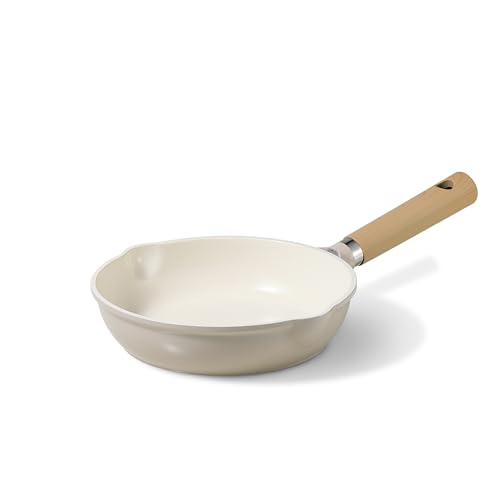
This pan features a non-toxic ceramic coating that delivers smooth, high-performance nonstick. It resists staining and is easy to wipe clean, making it ideal for cooks who want a bright, brand-new look after minimal effort. It is free from PFOA, PFAS, PTFE, lead, and cadmium. Best for health-focused kitchens, especially for eggs and delicate sauces. Choose this if you want a ceramic alternative to traditional coatings, but avoid if you require metal utensil compatibility is a must.
Blue Diamond 8″ Nonstick Frying Pan

This skillet uses a diamond-infused ceramic coating that promises higher durability and easier cleanup. It is toxin-free and designed for faster heating due to diamond conductivity. Best for cooks who want a tougher nonstick surface that can handle light metal utensil use, with the caveat that heat distribution can vary with cheaper stoves; avoid if you rely on extremely uniform heat for delicate sauces.
SENSARTE Ceramic 8″ Frying Pan

Made from natural ceramic, this pan is PFAS/PFOA-free and designed for healthy cooking. The surface offers excellent nonstick performance with minimal oil. It accepts induction and provides even heat thanks to a cast aluminum core. Best for daily use and easy egg release, with a limitation: the nonstick coating, like many ceramics, may wear with heavy use or abrasive cleaning.
Cuisinart Chef’s Classic 8-Inch Ceramic Open Skillet
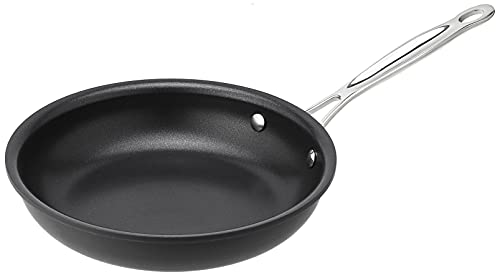
This skillet features a hard-anodized exterior for even heat distribution and a drip-free pouring design. The sloped sides maximize cooking surface, and it is oven safe up to 500 degrees F. Best for cooks who want a robust, long-lasting pan and a comfortable, cool-grip handle. A limitation to note: some users may prefer a fully closed lid or a different nonstick formula for certain recipes that require scraping or high-heat searing.
Buying Guide: Small Nonstick Skillets
What to consider when choosing a small nonstick skillet:
- Coating type: Ceramic, granite, or diamond-infused coatings each have different longevity, feel, and heat response. Ceramic is often easiest to clean; granite can offer a rugged look and good heat dispersion; diamond-infused coatings emphasize durability.
- Induction compatibility: If you have an induction stove, confirm a compatible base. Most modern small pans include a magnetic base, but it’s worth confirming.
- Care and maintenance: Nonstick coatings require gentle cleaning and moderate heat. Avoid metal utensils on delicate coatings to extend life.
- Heat distribution: Look for pans with an thicker bottom or a reinforced base to reduce hot spots, especially for eggs and delicate sauces.
- Handle design: Cool-grip or heat-resistant handles improve safety during stovetop use and transfer to the oven when applicable.
- Oven use: If you need oven compatibility, check the maximum degree and whether the pan is oven-safe and to what extent (some handles or coatings limit oven use).
Frequently Asked Questions
- What is the benefit of a small skillet over a larger one?
Answer: Smaller skillets heat quickly, are easier to store, and are ideal for single servings or quick meals like omelets and single-egg recipes. - Are ceramic coatings safe for everyday cooking?
Answer: Yes, when the coating is PFOA/PFAS-free, ceramic coatings are considered safe and easy to clean, especially for low-to-moderate heat cooking. - Can I use metal utensils on nonstick pans?
Answer: Generally not. Many modern surfaces are metal-utensil-safe, but using wooden or silicone utensils reduces wear and extends the pan’s life. - Is induction compatibility essential for a small skillet?
Answer: If you use an induction stove, yes. Look for a skillet with a ferromagnetic base to ensure proper heat transfer. - How do I extend the life of a nonstick skillet?
Answer: Use moderate heat, minimal oil, avoid abrasive cleaners, and hand wash when possible to protect the coating. - Should I choose ceramic or granite coatings?
Answer: Ceramic is often easiest to clean and very nonstick; granite can offer enhanced durability and a different cooking experience. Your choice depends on cooking style and maintenance preference.