Looking for a sustainable swap to replace disposable paper towels? This guide highlights top eco friendly dish cloths that deliver high absorbency, durability, and compostable materials. Each product is suited to different buyers—from busy families needing durability to minimalists seeking compostable options. Below you’ll find quick comparisons and practical buying tips to help you choose the best cloths for your kitchen routine.
Summary of selected products:
| Product | Best For | Key Benefit |
|---|---|---|
| Harps&Seb Swedish Dishcloths | All-around daily cleaning | High absorbency; biodegradable mix |
| Augine Swedish Dishcloths 5 Pack | Eco-conscious households with quick drying needs | Faster drying; durable washability |
| MoLKENE Swedish Dish Cloths | Long-term reuse with compostable design | 100% biodegradable; great absorbency |
| Wettex The Original | Classic, reliable option | Renewable cellulose and cotton, reusable |
| Skoy Cloth 4-pack | Budget-conscious, frequent cleaners | Durable, microwave-safe, highly absorbent |
Harps&Seb Swedish Dishcloths: 5 Pack

Features: Reusable and washable, replacing multiple rolls of paper towels; highly absorbent up to 20 times their weight; fully biodegradable (30% cotton, 70% cellulose). These towels are vegan and free from chemicals, and they can be composted within 6-8 weeks. Best for households seeking a compact, decorative cloth that handles daily messes while reducing waste. Limitations: washing and care are required to maintain longevity, and performance may vary with heavy grease.
Best for: Busy families and eco-minded cooks who want a compact, all-purpose cloth that doubles as a quick wipe and a long-lasting replacement for paper towels. Choose this if you value low waste and a biodegradable composition with vibrant designs.
Augine Swedish Dishcloths: 5 Pack

Features: Made from 30% cotton and 70% cellulose; fully compostable within 6-8 weeks; large 7.68 x 6.8 inches surface; absorbs up to 20x its weight; reusable, machine washable, and quick-drying; lasts over 100 washes. Best for: Environmental stewards who want an efficient, long-lasting cloth with fast drying and strong absorption. Limitation: large size may be less convenient for tight spaces or small sinks.
MoLKENE Swedish Dish Cloths: 10 Pack

Features: Absorbs up to 20x its weight; 100% biodegradable and compostable; reusable and washable; one cloth replaces about 15 paper towels. Best for: Homes that want a high-volume supply of cloths and a robust biodegradable option. A potential limitation is that heavy grease buildup may require more frequent washing to maintain absorbency, depending on care.
Wettex The Original Swedish Dishcloth

Features: Classic Swedish dishcloths suitable for kitchen cleaning, dishes, counters, and bathrooms; reusable as an alternative to paper towels; made from renewable cellulose and cotton fibers; designed to rinse, wring, and reuse. Best for: Traditionalists or households seeking a trusted, time-tested cloth with straightforward care. Limitation: fewer color and design options compared to some modern brands.
Skoy Cloth: 4-Pack

Features: Durable kitchen washcloths that replace paper towels, sponges, and rags; machine washable and microwave-safe for deeper cleaning; absorption factor of 15x its weight; assorted colors. Best for: Budget-conscious buyers who want a long-lasting, washable cloth with easy sanitation options. Limitation: some users note color fading with frequent washing; drying times depend on climate and airflow.
ACTIVE Swedish Dish Cloths: 12 Pack
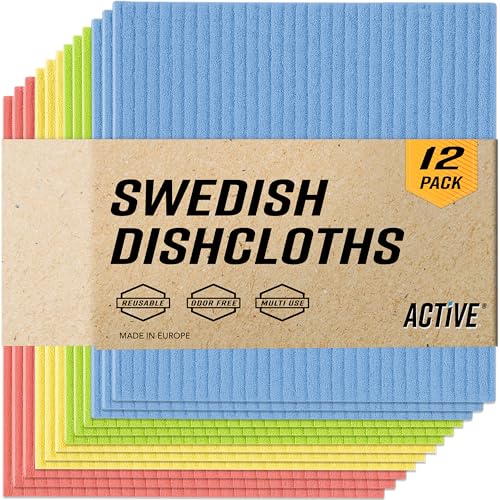
Features: Absorbs over 20x its weight; fast-drying; odor-free; reusable via dishwasher, washing machine, or by hand; made from European cellulose and plant fibers. Best for: Multi-room households needing a wide selection of colors and strong absorption. Caution: ensure proper drying between uses to prevent any residual odor in prolonged wet storage.
Buying Guide: Key Considerations For Eco Friendly Dish Cloths
Material composition matters. Look for blends like cotton and cellulose or 100% natural fibers that are compostable. Higher cotton content generally improves softness, while cellulose boosts absorbency. Consider whether you prefer fully biodegradable options or reusable cloths that last many washes.
Absorbency and size. If your goal is quick cleanup, choose cloths that absorb 15x-20x their weight and offer a larger surface area. Smaller cloths are handy for gadgets and sinks, while larger ones cover more counter space and dishes at once.
Care and longevity. Read care instructions: machine washable, dishwasher safe, or microwave-safe features extend usefulness. Frequent washing helps maintain odor-free performance and reduces maintenance concerns.
End-of-life. Biodegradable options compost quickly, while reusable cloths require proper disposal or composting in municipal programs. Evaluate how your household handles compost and waste streams.
Practical use cases. For busy kitchens, a 5- to 12-pack provides ample supply for daily tasks; color-coded sets can help separate tasks (dishes, counters, spills) and reduce cross-contamination.
FAQ
- Are Swedish dishcloths really biodegradable? Yes, many options mix cotton and cellulose and are designed to biodegrade in home or commercial composting within weeks to months.
- How many times can I reuse these cloths? Most products claim 50–100+ washes with proper care, depending on material and usage.
- Are they suitable for all surfaces? They are generally safe for most countertops and utensils, but test on delicate surfaces to avoid scratching.
- Do they replace paper towels fully? They can replace a large portion of paper towels given their absorbency, durability, and washability, but usage varies by household habits.
- Can they be cleaned in a dishwasher or washing machine? Many are machine washable and dishwasher-safe; follow package care guidelines for best results.
- Which option is best for small spaces? Slim, compact cloths with fast drying are ideal for apartments and dorms where storage is limited.