If you need a reliable food-safe sealer for stone, granite, soapstone, or other natural surfaces, these five products offer strong protection against water, stains, and wear while staying safe for food-prep areas. They’re suited for different buyers: homeowners sealing countertops, hobbyists restoring soapstone, and professionals maintaining stone floors or backsplashes. Below is a practical guide with direct comparisons to help you choose the right option for your project.
| Product | Best For | Key Benefit |
|---|---|---|
| Miracle Sealants 511 Impregnator (Pint) | General stone, tile, grout surfaces | Oil- and water-resistant invisible barrier |
| Weiman Granite & Stone Sealer Spray | Kitchen counters and exposed stone surfaces | Gentle, pH-neutral formula that repels water and soil |
| Granite Gold Water-Based Sealer Spray | Granite, marble, travertine, and other natural stone | pH-balanced, food-prep safe with no strong odors |
| The Original Soapstone Wax (12 oz) | Soapstone countertops | Natural wax for deepening patina and long-lasting protection |
| Rhino Wax Soapstone Oil 8 oz | Soapstone, slate, concrete countertops | No mineral oil, natural hydration for stone |
Miracle Sealants 511 Impregnator (Pint)

Best for a wide range of surfaces, this penetrating sealer creates an invisible barrier that resists water and stains. It is formulated for both indoor and outdoor use and covers up to 500 square feet per pint. It’s suitable for sanded grout, ceramic and porcelain tile, travertine, marble, granite, and more. This product is best for buyers seeking a versatile, easy-to-apply sealer with strong water resistance. Caution: test on a small area first to confirm appearance changes on delicate or polished surfaces.
Weiman Granite & Stone Sealer Spray

This spray sealer protects kitchen counters, sinks, and showers made from granite, quartz, marble, tile, and other natural stones. The formula is gentle, pH-neutral, and ammonia-free, making it suitable for frequent use in homes. It’s best for homeowners who want a straightforward spray-on solution with a focus on preventing water and soil penetration. Limitations include a need for reapplication over time depending on use, and it may require multiple coats for dense stone.)
Granite Gold Water-Based Sealer Spray

Designed for granite, marble, travertine, and other natural stones, this sealer provides a durable barrier against oils, water, coffee, and wine. It’s formulated to be food-prep safe and odor-free, with no phosphates or ammonia. This option suits buyers who want a dedicated stone sealer with broad stone compatibility and a focus on kitchen and bathroom surfaces. Caution: apply in a well-ventilated area and follow instructions for even coverage to avoid streaks.
The Original Soapstone Wax

This 100% natural, food-safe wax is designed to enhance soapstone countertops by darkening and enriching the stone’s patina while providing a protective layer. It’s best for soapstone owners who prefer a long-lasting finish without synthetic sealers. Choose this if you want a traditional wax approach rather than a penetrating sealer. Limitation: wax may require periodic reapplication and buffing to maintain shine.
Rhino Wax Soapstone Oil 8 oz
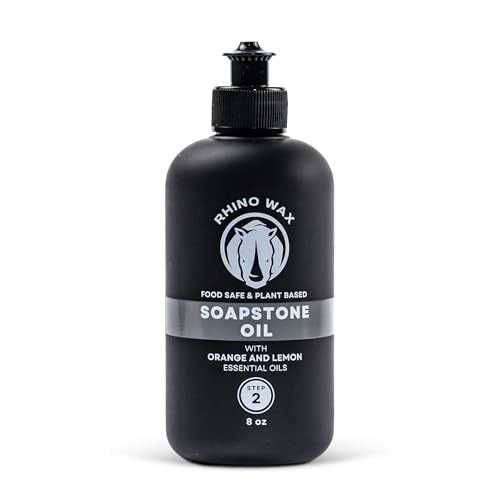
Formulated to hydrate and protect soapstone, slate, and concrete surfaces, this oil-based product contains no mineral oil and emphasizes natural hydration. It’s best for soapstone projects that require maintaining a soft, nourished surface with a food-safe approach. Caution: oil-based products may darken the stone temporarily and require careful application to avoid buildup on high-traffic areas.
Buying Guide
Key considerations when choosing a food-safe stone sealer:
- Surface type: Stone, soapstone, granite, or tile each respond differently to sealers. For soapstone, wax or oil formulas can enhance the patina, while impregnating sealers suit dense stones.
- Food-safety needs: If surfaces contact food, prioritize products specifically labeled as food-safe or odor-free.
- Indoor vs outdoor use: Outdoor surfaces may require more robust water repellency and UV resistance.
- Maintenance schedule: Some sealers last longer between applications; wax-based options may require reapplication to maintain sheen.
- Application method: Sprays are convenient for larger areas; penetrating impregnators suit complex textures like grout and uneven stone.
Frequently Asked Questions
- What is the difference between a penetrating sealer and a surface sealer?
Penetrating sealers absorb into the stone to repel liquids, while surface sealers create a protective film on the surface. - Are these products safe for food preparation areas?
Many listed options are designed to be food-safe or odor-free, but always check the label and follow manufacturer guidance. - How often should I seal stone countertops?
It depends on use and sealing type; high-traffic kitchens may require reapplication every 1–3 years for some products. - Can I use wax on all stones?
Wax works well on soapstone and certain woods, but may not be ideal for all stone types. Test first on a inconspicuous area. - Is sealing one stone enough to protect all surfaces?
For mixed materials (stone, tile, grout), you may need a combination of products tailored to each surface for optimal results.