Answering the common question “which kitchen waste container is right for my counter?” this guide compares top countertop and under-sink compost bins. Each option suits different clutter levels, odor control needs, and installation preferences. Ideal buyers include: homeowners seeking compact odor control, renters needing portable solutions, and busy households wanting easy-to-clean bins with built-in filtration.
Below is a quick, side-by-side look at five well-regarded picks. The table highlights capacity, primary use, and notable odor-control features to help you decide quickly.
| Product | Capacity | Best For | Odor Control |
|---|---|---|---|
| Utopia Kitchen Countertop Compost Bin | 1.3 gallons | Small households, counter-top use | Charcoal filter |
| EPICA Countertop Compost Bin | 1.3 gallons | Compact, stylish kitchen | Replaceable activated charcoal filter |
| OXO Good Grips Easy-Clean Compost Bin | 0.75 gallon | Minimal countertop footprint | Astute lid design with odor-lock |
| Gleynest Compost Bin (2.6 gal) | 2.6 gallons | Versatile mounting options | No activated carbon filter required |
| KIBAGA Beautiful Kitchen Compost Bin | 1.1 gallons | Rust-free, stylish odor control | Built-in charcoal filter compartment |
Utopia Kitchen Countertop Compost Bin

The 1.3-gallon stainless steel bin emphasizes durability and easy cleaning, making it suitable for daily kitchen use. Its fit-and-finish appeals to buyers who want a sleek, low-maintenance container on the counter. The included charcoal filters help trap odors, allowing you to store scraps briefly without immediate disposal. Best for small households or anyone who wants a compact, durable option that blends with modern kitchens.
Who it’s best for: small families or individuals who value a long-lasting metal surface and straightforward odor control. Why selected: strong build quality and reliable charcoal filtration offer practical odor management. Caution: the lid and filters require replacement over time for optimal odor control.
EPICA Countertop Compost Bin Kitchen

This 1.3-gallon stainless steel bin features an airtight lid and replaceable activated-charcoal filters to control odors naturally. It’s highlighted for its compact dimensions (7.16″ diameter x 11″ height) and ease of cleaning, with a one-piece molded design that resists rust and leaks. The bin is positioned for kitchens that want a stylish, odor-conscious solution without sacrificing counter space.
Who it’s best for: homes seeking strong odor control with a compact size and easy maintenance. Why selected: recognized by major magazines for its thoughtful design and filtration. Caution: ongoing filter replacement increases long-term maintenance steps and cost.
OXO Good Grips Easy-Clean Compost Bin
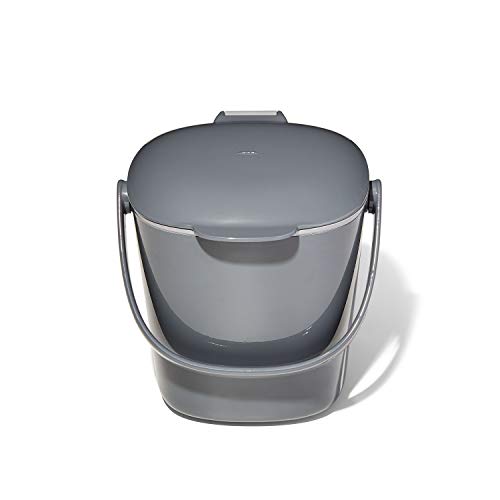
This smaller 0.75-gallon bin excels in apartments or compact kitchens. Its lid design flips up for easy filling and flips down to lock in odors, while smooth interior walls prevent buildup. It’s best for users who prioritize one-handed operation and simplified cleaning, with a compact footprint for tight counter spaces.
Who it’s best for: people with limited counter space or those who want quick, no-fuss odor containment. Why selected: practical, user-friendly lid mechanism and interior cleanliness. Caution: small capacity means more frequent emptying in busy kitchens.
Gleynest 2.6 Gallon Compost Bin
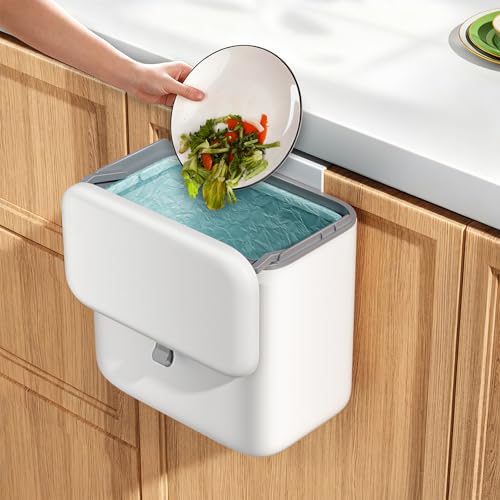
This larger hanging or under-sink option provides a 2.6-gallon capacity, making it well-suited for households that generate more waste daily. It installs easily with included hooks and adhesive options, which facilitates mounting on cabinet doors or flat surfaces. It does not rely on an activated carbon filter, and instead focuses on a practical lid design to minimize odors.
Who it’s best for: households needing more capacity and flexible placement. Why selected: easy installation with multiple mounting choices and ease of use. Caution: lack of a dedicated odor filter means more emphasis on lid sealing and regular emptying.
LALASTAR Compost Bin Kitchen
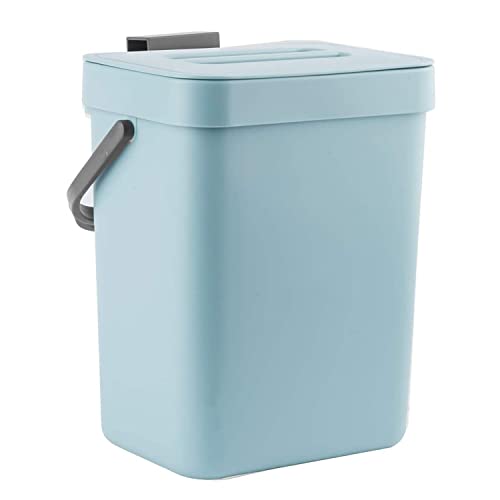
The LALASTAR bin is a compact 3-liter (0.8 gallon) model designed for odor-blocking with a lid, making it suitable for RVs, offices, or small apartments. It’s light and hangable, with mounting options for cabinet doors or walls. This option emphasizes portability and quiet operation, ideal for spaces where a larger bin is impractical.
Who it’s best for: travelers, small-space dwellers, and office setups needing a discreet, odor-controlled option. Why selected: compact footprint and versatile mounting. Caution: smaller capacity may require more frequent emptying in high-waste environments.
Buying Guide: How To Choose The Right Kitchen Waste Container
- Capacity vs. space: Choose capacity that matches your daily waste, but consider the counter or cabinet space where the bin will live. Larger bins reduce trips to the main compost or trash, but require more room.
- Odor control: If you generate strong-smelling scraps, bins with charcoal filters or airtight lids offer better odor management. Filtration may require ongoing filter replacement.
- Mounting and placement: Do you prefer countertop, under-sink, or cabinet-door mounting? Some bins are designed to hang or mount, which can free up counter space and reduce clutter.
- Material and durability: Stainless steel options resist rust and are easier to clean, but can be heavier. Plastic bodies tend to be lighter and more affordable, though sometimes less durable.
- Maintenance: Consider how easy it is to clean the interior and replace filters. Smooth interiors prevent residue buildup and simplify cleaning steps.
- Appearance: If the bin is visible on the counter, choose a design and finish that complements your kitchen style.
Common Questions About Kitchen Waste Bins
- What is the best odor-control method for a compost bin? A built-in charcoal filter or airtight lid generally provides superior odor reduction.
- Should I choose a hanging bin or a countertop model? Hanging bins save counter space and are convenient if you have limited room, but countertop models are often easier to access.
- Is a larger capacity always better? Not necessarily; choose capacity based on daily waste and household size to avoid unnecessary trips to empty.
- Do I need a separate compost bin if I have curbside composting? A dedicated kitchen bin can help you curb smells and keep composting organized before disposal.
- How often should filters be replaced? Replacement frequency depends on usage and filter quality; follow the manufacturer’s guidance for odor control effectiveness.
- Can these bins be used under the sink as well? Many models are designed for under-sink or cabinet mounting to reduce countertop clutter.